About This Website

This site, as most of you may have noticed by now, is managed only sporadically. We have tried to keep these stories accessible since the first Morrison history website was developed in 1998, and it has been through many incarnations along the way.  That original site was part of the larger town website back when the Morrison Heritage Museum was functioning (about 1993-2003). You can still explore parts of that site on the Internet Archive, aka the Wayback Machine. That link is a cookie-crumb trail for you at least, and we’re in the process of moving that older content over here, as well as posts from 2009-2010 that have been on a separate blog.  

Until we finish reorganizing the contents here, the best way to find things is to search for them using the box in the left sidebar.

Former residents and descendants often leave comments, and you are welcome to do so. Sometimes you can get a good conversation going, with me (Sally) or with others who may answer. If you need a prompt answer, however, please contact the Town office for referral (303.697.8749). Although the Morrison Historical Society is no longer active, we will try to connect you to information.

Note that the Morrison Historical Collection at Jeffco Archives is also a resource; contact Ronda Frazier for access. 
Index to Posts by Category

People

Events

Good Times

Places

Stories

Businesses

School

“Recent” Additions

In the interests of consolidation, we’ve moved some posts here that were included on a blog site that’s no longer in use, as well as pages from the original version of the Town’s history website.

For your convenience, here are links to older posts from this millenium (with original posting dates), collected under the category “good times.”

A few additions are of older historical significance. Be advised that the name index and pioneer genealogies need work and are incomplete.

School Days

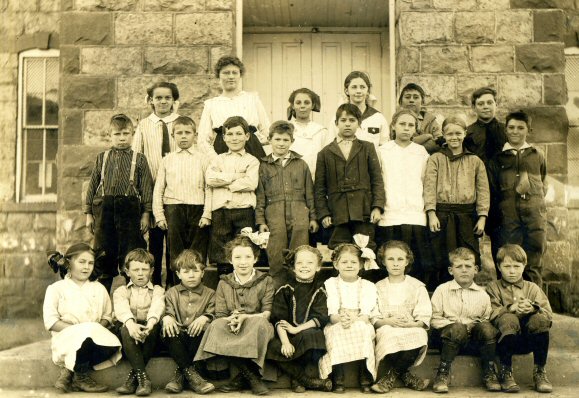
James E. Parsons, Sr., was in 5th grade at the Mt. Morrison school in about 1919. In the photo above, he is third from left in the center row. Parsons later worked for the Morrison Monitor, one of the town’s early newspapers.

A year earlier, 1918, perhaps with James Parsons in 4th grade.

Photos courtesy Parsons Family.

Mt. Morrison Honor Roll

Ruth Matthews Schneider poses in front of a mural honoring area men who served in World War II. The men represent families from Morrison proper (Denbow, Fleming, Hocking), as well as outlying areas from Conifer (Turkey Creek, including LeGault, Granzella, Snedeker) to Lakewood, east along Bear Creek (McCoy, VanGorden). The local VFW Post is named after Paul Westover, who was the first local boy to be killed. He died in the Battle of the Bulge, 1944-45.

This mural was on the east wall of the building at 301 Bear Creek Avenue, now the Morrison Inn, facing Stone St. for many years. Click to enlarge the photo. In May 1984, it was replaced with a stylized Mexican motif of saguaro cacti and exotic birds and flowers, which remains today. Pattie Penegor and Donna Dragos were credited with the design and execution of the new mural.

Boyd Jacobson

Remembering Jake, by Roger Poe

It seems fitting that we report here, regretfully, the passing of long-time resident Boyd Jacobson. Known by most everyone as Jake, he succumbed to cancer December 29, 1998, in Williston, North Dakota, near his original home of Bonetrail.

He and Clara, his wife of 50+ years, were involved and concerned about matters of our town of Morrison ever since they arrived in 1952. Together they raised 3 sons and 2 daughters at their humble abode on Bear Creek Lane. In the early days, that home even served as the Town Office for many years while Clara was Town Clerk. Their children all still live in the metro area, including Wayne who remains here in Morrison.

During simpler times, Jake was known as the Great Gildersleeve of Morrison, “Water Commish,” working almost single-handedly to keep our archaic water system afloat. When natural gas was introduced here, Jake was very much a part of the implementation. And, as a sheet metal guy, he gladly helped many of our citizens install their very first gas furnaces. Helping others with little more than a “thank you” was his happiness.

Veterans of Foreign Wars, Post 3471 of Morrison, was and still is a viable community service organization, thanks to the hard work and leadership of Jake and his family. He held all the officers’ chairs in his rise to the ultimate rank as Department Commander in Colorado. His son Terry carries on this tradition of active service to our local post.

Jake never had an enemy. His philosophy in life was simple: to be happy no matter the adversity, and to deliver happiness to everyone around him. We will miss his holiday lefsa, lutefisk, and his hearty laughter.

Jake was buried beside Clara on Wednesday, January 6, 1999, at the Morrison Cemetery in Red Rocks. Uff da!

Reprinted from The Town Crier, Jan/Feb, 1999,
published by the Morrison Action Committee

Ed Drab

by Roger Poe

It was a thrill recently to meet a former resident of Morrison who had moved away in 1969. He was just a guy who was looking for a residence to buy, or property on which to build. (Of course, we meet people every day with a similar design.) It was only after lengthy conversation, finding that he knew every one of our Morrison forefathers, that we realized he had been here before. He had grown up in the LaGrow house on Bear Creek Lane. He was a LaGrow, his name is Ed Drab, and he’s the son of Morrison’s hairdresser, Ed Drab Sr., who ran a shop on Bear Creek Ave. in the 1960s-70s [in the former bank building where Guiseppe’s is now located; later Mill St. Deli].

After finding out about his family tree, I showed him the “Memory Album, Morrison, Colorado,” by Lorene Horton, published in 1976. Flipping through the pages, he remembered many of the original photos and commented frequently: “that’s my aunt Bertha,” or “there’s Alex (Jordan),” or “there’s my mom when she was a child,” and “there’s Frank Baker.” And so it went, for hours!

He presently resides in Las Vegas, Nevada. His personal knowledge and growing up stories of people, places and experiences were exceedingly valuable. With time, our connections with the important past are thinning.


Footnote: Museums Coordinator Sally White adds that we have also been visited recently by two other distinguished relatives. Grace (Schrock) Henderson, youngest child of Morrison pioneer Jonas Schrock (Schrock Saloon), and her daughter Joyce stopped in, and Henry Baumgartner, a descendant of John Brisben Walker, came in search of our records on our local innovator and entrepreneur. We’ll have more on their visits in a future issue.

Reprinted from The Town Crier, Jan/Feb, 1999,
published by the Morrison Action Committee

Fred Stickler and Bertha Hebrew

Fred Stickler, with poodle Mitzi.

Whether or not you know you know Fred, you know Fred! Fred is a familiar sight, always on his golf cart around Morrison and Red Rocks, accompanied by his poodle, Missy. Fred is celebrating his 94th birthday on February 12th [1999], so if you see him this week, you might want to extend good wishes.

Fred was born in Rye, Colorado, in 1905, among the youngest of nine children, where his family was homesteading in a two-story log cabin. At 13, he walked over LaVeta Pass to Alamosa for his first job as a ranch hand.

Rancher, blacksmith and farrier, ironworker, all this prepared him for his later life in Morrison. After serving in World War II, Fred married Bertha Mae (Hebrew) LaGrow in 1947 and moved to Morrison. Fred joined Bertha in running the Gateway Stables, a business Bertha had previously run with her mother, Nora Hebrew. Sam and Nora Hebrew had started the donkey concession in Red Rocks when the area became an attraction in the 1880s.

When he married Bertha, Fred worked for General Iron, having been a blacksmith in the army. Bertha owned or rented pasture for cattle, horses, and burros from Indian Hills along Bear Creek all the way to Sheridan. Fred gathered hay for the stock clear to Meyers Ranch on Hwy 285, after he finished his regular day’s work at General Iron on Santa Fe Drive. One of his ironworking projects was the superstructure for the original welcome sign over Washington St. in Golden.

In her “spare” (?) time. Bertha Mae was quilter and a watercolor artist; Fred called her the “Queen of Morrison.” He has some of her pictures in his home on Bear Creek Ave., and the house is still labeled “Gateway Stables” in old, nonfunctioning neon.

Reprinted from The Town Crier, Jan/Feb, 1999,
published by the Morrison Action Committee

Letters from Bettie

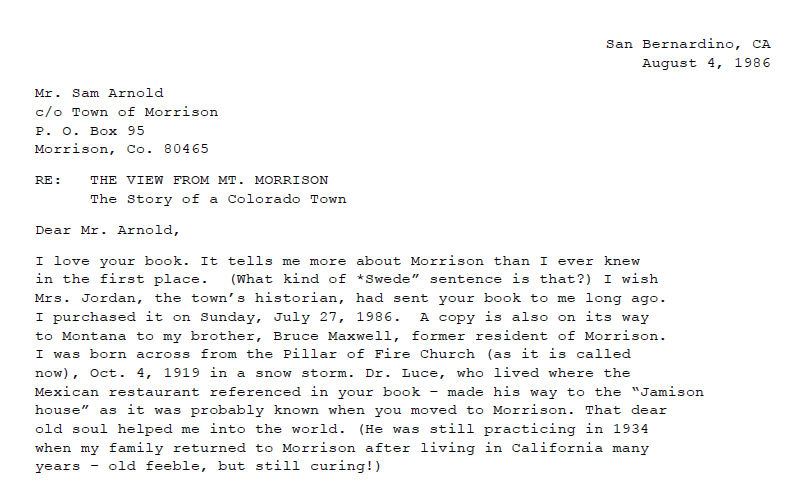
When the Morrison Heritage Museum was in operation, the Town staff directed any historical correspondence to us. In the 1990s, we received several postcards from Bettie Swanson Ries, the granddaughter of John Swanson. But the letter we’re sharing today was written in 1986 to Sam Arnold, and is included in the Morrison Historical Collection at the Jefferson Co. Archives.

The beginning of a letter from Bettie Swanson Ries to Sam Arnold, written August 4, 1986.

Bettie began her letter with a note of appreciation to Sam Arnold for his little book, The View from Mt. Morrison, but went on to share a variety of reminiscences about her time growing up in Morrison, at the Cliff House in the 1930s. People and places remained fresh in her memory when she visited in July 1986, and she writes that “it lifted my heart on Sunday July 27 to see the young people of today enjoying Morrison and environs in their way, and to recall how we enjoyed and loved it in ours 50 years ago.” Bob Dylan had played Red Rocks that weekend.

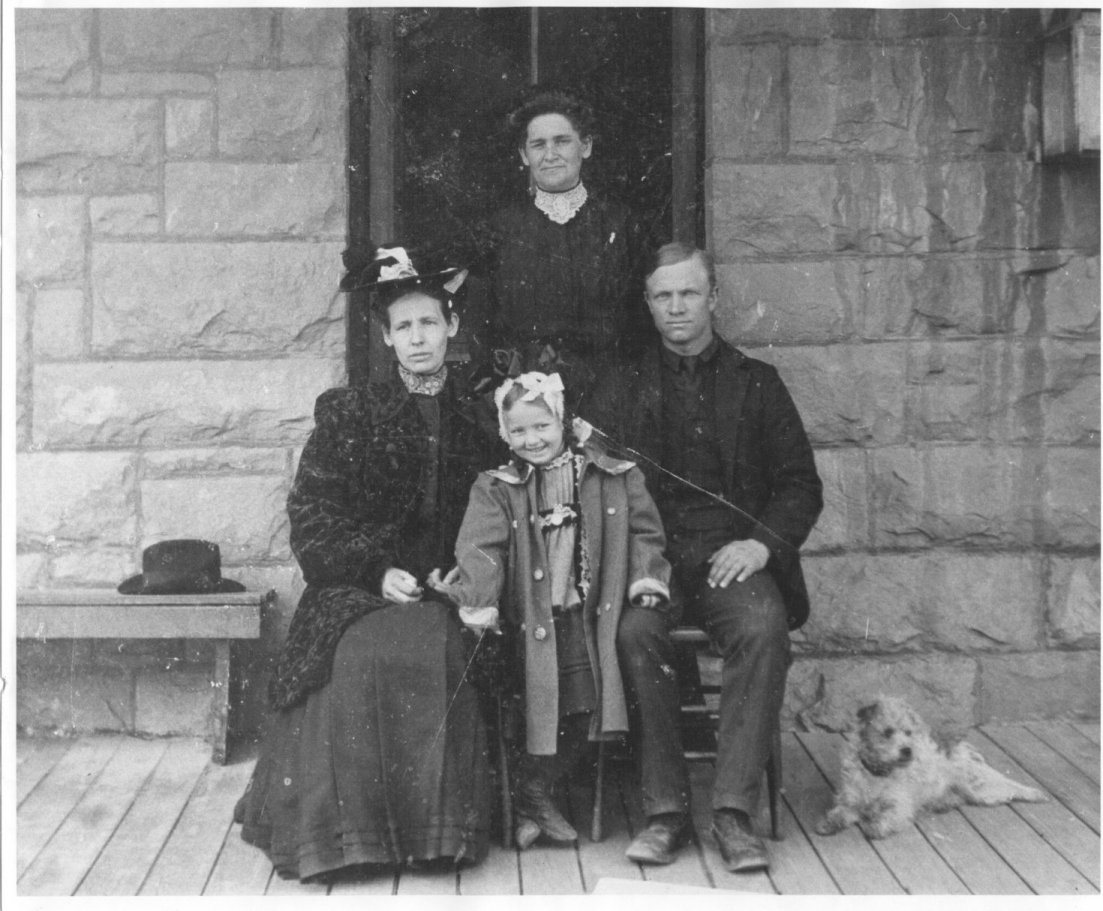
The Swanson Family, second owners of the Cliff House.

Peggy Hahn invited me into the Cliff House as my grandfather, John Swanson was the second owner. I gave her a lot of information about how it was in 1929, and how I recalled what my mother, Helen Keel Swanson said it was when she came as a bride. My father Harry Swanson never knew any other way of life except hotel living.

From Red Rocks to Soda Lakes and Berriens to Schneiders, Bettie packed a lot of stories into this one letter. Working at the Hillcrest Inn, swimming in the pool there, and climbing Red Rocks— times were different in Morrison back then. Read Bettie’s entire letter here.

Morrison’s Long Lost “College”

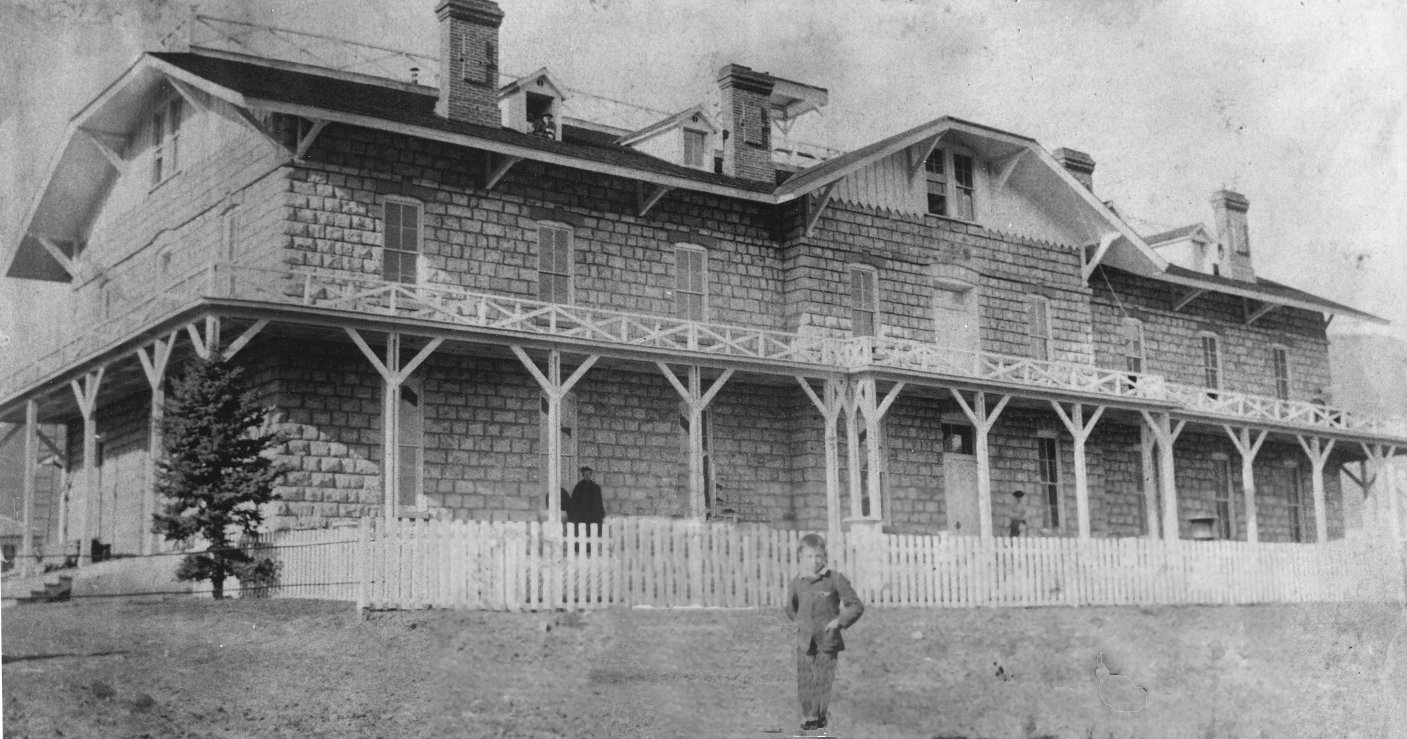
The Swiss Cottage, built by George Morrison for Governor Evans in 1874, was known by many names through the years.

That’s right, tiny Morrison was once a college town. For just four years, 1884-1888, Morrison was home to “Sacred Heart College,” really more of a prep school as some students were less than 14 years old. Originally founded by Jesuits in Las Vegas, New Mexico, the new Sacred Heart for Colorado opened in a former hotel building with just 24 students.

The building selected was one of Morrison’s dominant structures for nine decades. Known first as the Evergreen Hotel or the “Swiss Cottage,” the three-story building housed the students and their Jesuit instructors. A smaller building on the site provided servants’ quarters. By 1888, the remote location was deemed inconvenient, and the college moved to a new campus at Berkeley, close to Denver, and became Regis College (now University). A close friendship between the Jesuits and John Brisben Walker facilitated the trade, with Walker acquiring title to the Morrison location and renaming it the “Mt. Morrison Casino.” Read more about the Jesuits in Jefferson County here.

Its sandstone bulk loomed over the town’s skyline from 1874 to 1982, when it was demolished after a long and colorful history.