Category Archives: timeframes

What’s Ahead?: Morrison’s Future

Morrison entered 2025 on the road to major changes. The Town Board demolished both its Police Department and its Planning Commission (including the Historical Commission). Several property owners proposed major revisions with one, demolition of the Tom Lewis House (#10) completed in May 2025. Construction of a two- to three-story hotel on that site is underway.

Closed businesses and vacant downtown properties mean that sales tax revenues are down. Several long-running businesses are gone, including Morrison Liquors (1992-2024), Café Prague (2001-2024), and Morrison Carworks (1994-relocated 2024). The Morrison Inn (since 1974), Tony Rigatoni’s (since 1990), Willy’s Wings (since 1982), and others continue.

Other businesses operate as usual: Tom’s Upholstery (since 1960), the Morrison Holiday Bar (since 19xx), and Red Rocks Grill (since 1994) share a block that was recently posted for sale. Asking price: $15 million.

Whatever comes of these changes, it’s clear that the future of Morrison will have a different face than its present.
Millennial Morrison 1985-2024

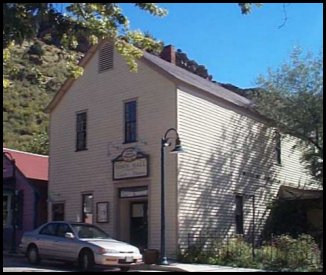
#14, Morrison Town Hall, 110 Stone St., circa 2000 after renovation in the late 1990s.

Beginning in the late 1980s, Morrison shifted subtly toward a modern demographic, as new business and residential owners brought new ideas and connections to urban areas in the east, and the town became more of a “bedroom community,” with most residents employed elsewhere. The Town Board wrestled with issues of growth, ensuring future water supplies, and coping with tourists and concert-goers as Red Rocks expanded its activity levels.

The large annexation of the “Colco Property,” approved in 1984, was controversial. Focus on planning, regional coordination, communication, and community increased; the town looked more to the future than to the past as “newcomers” outnumbered “old-timers.” Development of Dinosaur Ridge and the Morrison Natural History Museum brought new attention to the area during this period. In 2024, Morrison celebrated its Sesquicentennial, 150 years of small town survival.

Read more about Morrison in the late 20th-21st century:

Mid-Century Morrison 1931-1984

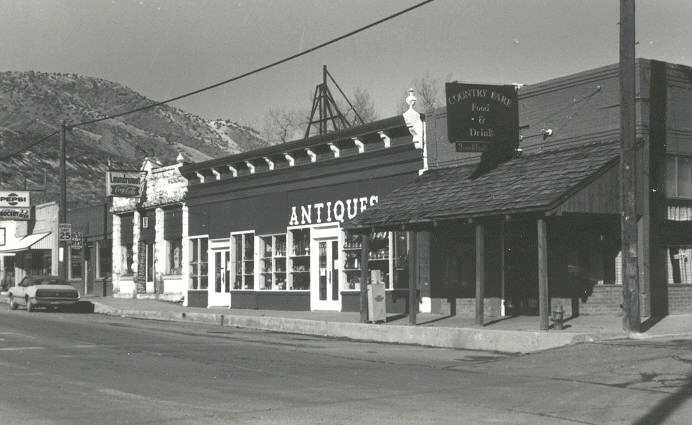
Morrison’s main street in 1976 photo; antique stores were prominent among town businesses.

Following a disastrous fire and repeated floods in the 1930s, Morrison’s economy settled into quieter times. Large families established multi-generational lineages as people settled and stayed, representing “hard-working, middle class western America.”

The town was further described, in the 1975 nomination for historic designation:

Though worn by age and lacking the early vitality and bustle of the original town, Morrison is essentially the same town physically and intrinsically. The location and make up of the structures is still the same; the makeup of the residents is essentially the same. The vital element of the railroad is missing but the town’s geographical placement ensures [its] continued involvement as a focus of movement from plains to mountains and vice versa. In a society that places great value on change and revision, it has remained a reflection of the pioneer ethic and physical integrity of a time past.

“Pioneer Days” began in the 1950s as a celebration for the close-knit community and a link to the town’s storied background. In the 1970s, interest in history grew, and designation as a historical district came in 1975, just in time for the nation’s bicentennial. The Morrison Historical Society produced a walking tour map and published the Memory Album. Reenie Horton ran a museum out of her property at 116 Stone St. (#16 on map).

Read more about Morrison’s mid-century period:

Early Morrison 1872-1930

Morrison’s first 50 years or so were bustling times, with industry and development taking center stage. Morrison’s handy location and access to resources brought the railroad, which ensured the town’s growth for a time through tourism and commerce. The original pioneers and promoters—men like George Morrison, Alex Rooney, John Ross, and John Brisben Walker—prospered along with the growing town as businesses flourished.

The railroad dwindled and finally closed in 1925; the Depression took over. Ownership of Red Rocks Park was transferred to the City of Denver in 1929; J.B. Walker’s death in 1931 also marked the end of this period.

Read more about Morrison’s early years: