From a newspaper account of the events of July 24, 1896:
Friday evening the fierce black clouds in the west brought early darkness. A light rain drove the people into their houses, lamps were lighted, and the children were put to bed. Up town there were the usual loiterers in the stores and some stood by the open doors watching the rain fall. The air was calm and still and there was nothing to even indicate the change that was coming.
Suddenly a sullen roar, resembling thunder, yet more sustained, so that none mistook it for that noisy sound. Among those in the store, several had heard that sound before and knew its meaning. Their faces paled as they shouted, “A flood, a cloudburst!” Around the bend came the monster, appearing as a log-crowned curling wave ten feet high. It did not look like water, having more the appearance of a solid mass, dark as night, with a luminous crest.
It seems to move with almost lightening-like rapidity. When it reached the bridge above town, the first object that seemed to be in its path, there was no clash; the bridge hesitated but an instant, moved slowly from its piers, then went rolling end over end down past the depot until the railroad bridge was reached. Here there was a moment’s resistance, but the water simply paused to wait for reinforcements.
Following the 1896 flood, the Rocky Mountain News reported that
Less than two days ago Morrison was considered the most delightful, quiet and peaceful summer resort in Colorado. Today [July 26, 1896] it is a mass of wreckage and ruin, the people panic stricken and a number of those who were inhabitants are either lying at the morgue awaiting burial or are buried under an enormous mass of debris somewhere between Denver and Morrison, perhaps never to be found until Gabriel sounds the last trumpet on the day of judgement.
A day later, an update appeared: “Morrison Will Live”
The disastrous flood at Morrison has caused the active circulation of a rumor to the effect that the town would be abandoned by the people there. There is no reason or truth for the foundation of such a report. While Morrison has received a severe blow, she will recover promptly and there is not the slightest danger of a repetition of such a flood, for several years at least. …
This first-person account by Francis Kowald, S.J., describes one of many floods to strike in the lower reaches of Bear Creek Canyon and Morrison. Due to space constraints, it was not included in the 2014 issue of Historically Jeffco devoted to floods.
The writer of this short sketch happened to be an eye-witness of one of such frightful floods, which fortunately took place during the bright day-time. A cow-boy herald gallopped [sic] along at break-neck speed ahead of the swiftly on-rushing flood, some twenty minutes before its arrival and shouting at the top of his voice as he bounded along the road-bed, gave kindly warning, like another Paul Revere, to all residents housed on the banks or living close to the bed of the creek. They who were surprised and caught in the canyon itself during the storm, abandoning every kind of vehicle or truck they had, were obliged to scramble up the rugged mountain-sides, to save their own lives as well as their beasts of burden, if possible and time allowed in such an emergency.
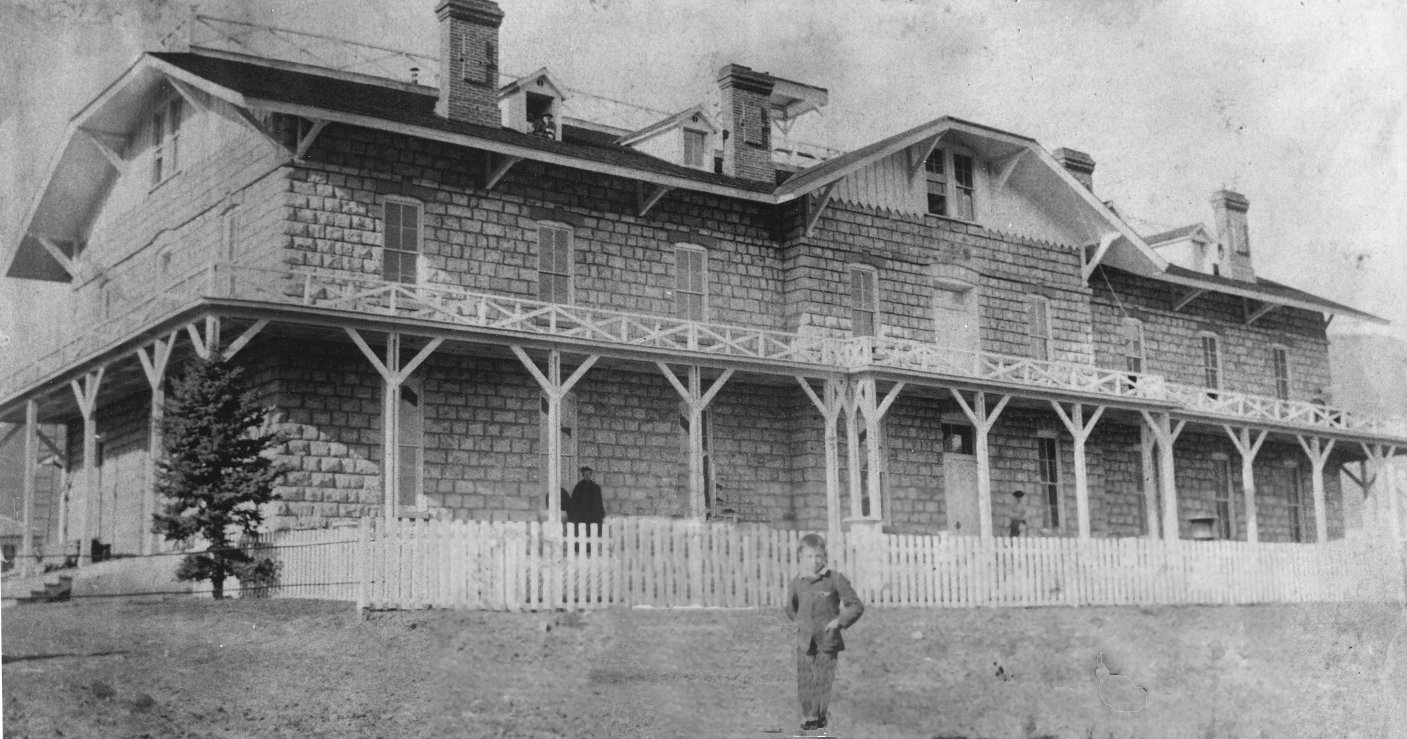
Jesuits and students watched the flood described here from the porches of Sacred Heart College, as it was known from 1884-1888. This building, the Evergreen Hotel, later the Swiss Cottage, built by George Morrison for Governor Evans in 1874, was known by many names through the years.
This great flood occurred at the beginning of July during the third year vacation-days.(1) The lightning and thunder-storm had spent its fury and the sun appearing once more between the straggling clouds of the recently overcast and lowering sky, was again shining bright and peaceful. The creek was yet low, with scarcely one [foot] high running water in its bed, as we all at the College could notice, when upon the warning given, we had rushed to the porch to witness the terribly strange and ominous spectacle.(2) A few more moments of wild excitement and anxious dread and expectation, and behold! the onrushing torrent hove in sight. On its swollen crest of some three feet abrupt height, it carried the wreckage of some ten small wooden bridges, later rebuilt with reinforced cement, which had been erected for crossing and recrossing the creek along its nine mile circuitous course through Bear-Creek canyon from the village of Evergreen to the town of Morrison. Here it met the ponderous, twice planked wooden bridge, the largest of them all, about 30 ft. long and 10 ft. wide.(3) Here the torrent was arrested for a while in its impetuous course, not more than a minute or thereabout, in trepidation, as it were, of what it next would do, while it rose and swelled in size and piled up its ever augmented debris upon debris, until with a loud snapping and crashing of timbers like the report from a heavy gun, it bodily dislodged and lifted the entire bridge from its firm and heavy moorings and supports on either side and then with a mighty swirl turned and hurled it lengthwise like a huge arrow shot from a powerful bow with lightning speed down the fiercely raging and seething stream.
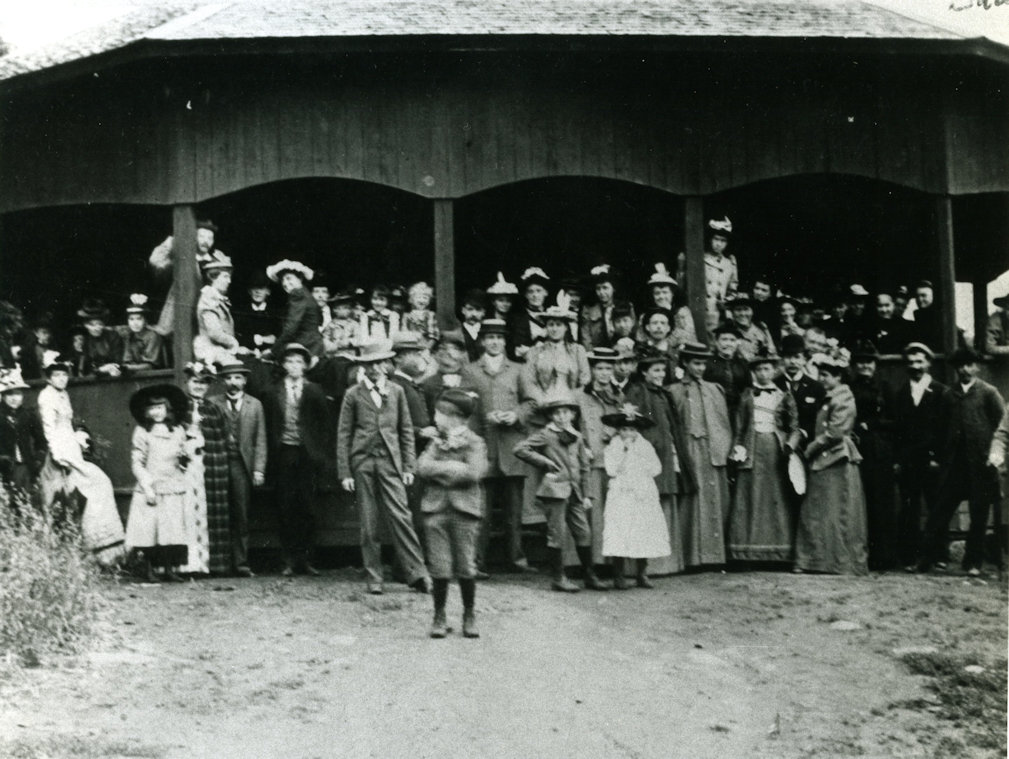
The Lorelei Park dance pavilion in downtown Morrison.
A moment later missing the Depot, it hit and demolished the wooden, octagonal, roof-covered Pavillion [sic], measuring some 15 ft. in diameter and some 12 ft. in height and built some 10 ft. above the creek, which was used as a grandstand for dancing, brass-band exhibitions and other amusements for the town-folk gathered together on certain festivals as Shrove Tuesday of carnival, Decoration-day, Fourth of July, All Hallows and the like, as it was centrally located in the town. With this accumulated wreckage the darting current nearly undermined the foundations of the adjacent Railroad Station and a few yards beyond carried away some 90 ft. of rail-road track with its steel rails still fastened to the ties or sleepers end at the first curve of turn tossed it out of the water and through the garret-floor and roof of a hut, inhabited by an elderly couple, without the least injury to their personal selves. It next spent its rage against the solid masonry and stone pillar-supports of the Railway-bridge across the creek near the gorge east of the town, loosened several flags, measuring 2 x 4 x 8 ft. and weighing tons apiece, and flung them yards away upon the banks below. After a good deal of further damage to cattle, hogs, poultry and a few horses, all of which were drowned in the lowland fields, it hurried along the plain, till finally it emptied or debouched into the South Platte River near Denver, some 16 miles distant toward the east. Fortunately no human lives were lost on this occasion, though a number of previous and subsequent cloudbursts claimed their sad toll of fatalities also among the lowland inhabitants along the banks of Bear-Creek.
Notes: (1) As the college started in the fall of 1884, we believe the “third year vacation-days” would indicate July 1887, assuming accurate recollection on the part of the author who was writing this account in about 1935. Except where noted in brackets, text and punctuation and spelling are as in the original version. (2) The large building housing Sacred Heart College from 1884 to 1888 sat on a bluff about 200 feet above the normal level of the creek. With few trees at that time to obstruct the view, it is likely that the observers had an excellent vantage point to observe this event. (3) This description likely refers to the bridge at South Park Avenue, which was the main route south of town toward Turkey Creek and, eventually, South Park.
Excerpted from (with paragraphing added): A BRIEF HISTORICAL SKETCH AND SOME REMINISCENCES OF The SACRED HEART COLLEGE Conducted by the Jesuit Fathers At Morrison, near Denver, Colorado From October 1884 till June 1888. From pages 11-13 of typed manuscript housed in Archives and Special Collections, Regis University.
Morrison entered 2025 on the road to major changes. The Town Board demolished both its Police Department and its Planning Commission (including the Historical Commission). Several property owners proposed major revisions with one, demolition of the Tom Lewis House (#10) completed in May 2025. Construction of a two- to three-story hotel on that site is underway.
Closed businesses and vacant downtown properties mean that sales tax revenues are down. Several long-running businesses are gone, including Morrison Liquors (1992-2024), Café Prague (2001-2024), and Morrison Carworks (1994-relocated 2024). The Morrison Inn (since 1974), Tony Rigatoni’s (since 1990), Willy’s Wings (since 1982), and others continue.
Other businesses operate as usual: Tom’s Upholstery (since 1960), the Morrison Holiday Bar (since 19xx), and Red Rocks Grill (since 1994) share a block that was recently posted for sale. Asking price: $15 million.
Whatever comes of these changes, it’s clear that the future of Morrison will have a different face than its present.
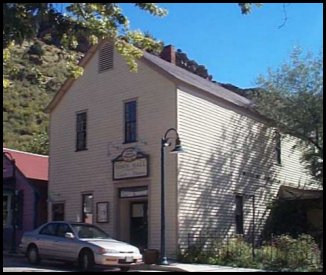
#14, Morrison Town Hall, 110 Stone St., circa 2000 after renovation in the late 1990s.
Beginning in the late 1980s, Morrison shifted subtly toward a modern demographic, as new business and residential owners brought new ideas and connections to urban areas in the east, and the town became more of a “bedroom community,” with most residents employed elsewhere. The Town Board wrestled with issues of growth, ensuring future water supplies, and coping with tourists and concert-goers as Red Rocks expanded its activity levels.
The large annexation of the “Colco Property,” approved in 1984, was controversial. Focus on planning, regional coordination, communication, and community increased; the town looked more to the future than to the past as “newcomers” outnumbered “old-timers.” Development of Dinosaur Ridge and the Morrison Natural History Museum brought new attention to the area during this period. In 2024, Morrison celebrated its Sesquicentennial, 150 years of small town survival.
Read more about Morrison in the late 20th-21st century:
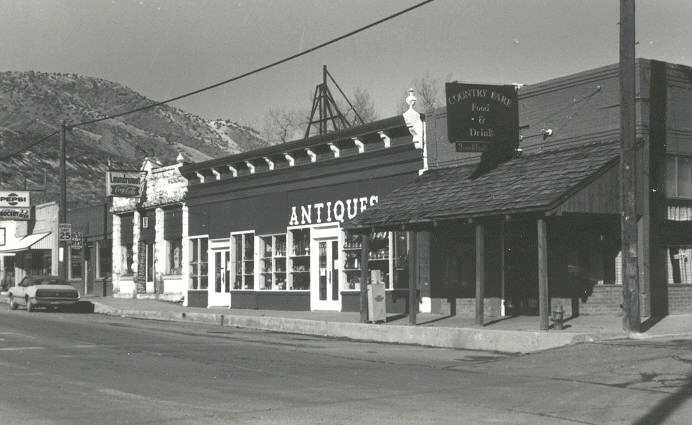
Morrison’s main street in 1976 photo; antique stores were prominent among town businesses.
Following a disastrous fire and repeated floods in the 1930s, Morrison’s economy settled into quieter times. Large families established multi-generational lineages as people settled and stayed, representing “hard-working, middle class western America.”
The town was further described, in the 1975 nomination for historic designation:
Though worn by age and lacking the early vitality and bustle of the original town, Morrison is essentially the same town physically and intrinsically. The location and make up of the structures is still the same; the makeup of the residents is essentially the same. The vital element of the railroad is missing but the town’s geographical placement ensures [its] continued involvement as a focus of movement from plains to mountains and vice versa. In a society that places great value on change and revision, it has remained a reflection of the pioneer ethic and physical integrity of a time past.
“Pioneer Days” began in the 1950s as a celebration for the close-knit community and a link to the town’s storied background. In the 1970s, interest in history grew, and designation as a historical district came in 1975, just in time for the nation’s bicentennial. The Morrison Historical Society produced a walking tour map and published the Memory Album. Reenie Horton ran a museum out of her property at 116 Stone St. (#16 on map).
Morrison’s first 50 years or so were bustling times, with industry and development taking center stage. Morrison’s handy location and access to resources brought the railroad, which ensured the town’s growth for a time through tourism and commerce. The original pioneers and promoters—men like George Morrison, Alex Rooney, John Ross, and John Brisben Walker—prospered along with the growing town as businesses flourished.
The railroad dwindled and finally closed in 1925; the Depression took over. Ownership of Red Rocks Park was transferred to the City of Denver in 1929; J.B. Walker’s death in 1931 also marked the end of this period.
September 25 from 10 a.m. to Dusk Grounds of Bear Creek Nursing Home, Highway 8 and Summer Street Morrison, CO, 80465
Free- make your own cider on “Apple Annie’s” historic cider presses — bring your own apples and empty beverage containers; bake sale by Red Rocks Elementary; horsehoe contest (register by 10:30am) by VFW Post 3471; car show by gocatspeedshop.com; ; live music at 2, 4 and 6 by Morrison Town Band and The Barley Bros./Holiday Bar.
Vendors include food by the Blue Cow, Smokin Yard’s BBQ, Pizza Casa, the Town of Morrison, Morrison Liquors, and the Morrison Action Committee; and a beer tent by VFW Post 3471.
And more: jumping castle by Mutual Of Omaha Bank; pedal tractors by Red Rocks Baptist Church; hay rides by Bear Creek Stables/Holiday Bar; climbing wall by the National Guard; massage by Lynn Downer’ Wood Art; women’s clothing by “Giddy Up” and others; wool purses by Susan; aprons and jewelry by Sally & Laurie; Beauty Control Cosmetics; Teddi’s Creations & Collectibes; Loose Ends Fiber Farm; and more!
Thanks to our Corporate Sponsors: Mutual of Omaha Bank, Canyon Tack & Feed, Bandimere Speedway, Aggregate Industries, Café Prague, Flights Wine & Coffee Bar, Morrison Natural History Museum Foundation, Morrison Carworks, Morrison Holiday Bar, West Chamber/Rooney Valley, Billfest Leonard, the Town of Morrison, and others.
Also we wish to acknowledge the following the following for their generous in-kind contributions: Bear Creek Stables, VFW Post 3471, Bear Creek Nursing Home, Red Rocks Baptist Church, Chambers Consulting, Maja Stefansdottir Agency, Billy’s Home Cooking, Bear Creek Development, Morrison Liquors, Budweiser Beer, Scramble Campbell, Kathy Wages, gocatspeedshop.com, Red Rocks Elementary School, The National Guard, the Morrison Action Committee, the Morrison Town Band, and all of the Ciderfest volunteers.
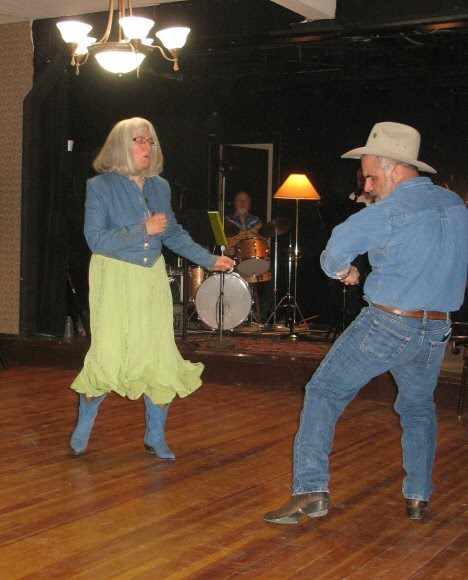
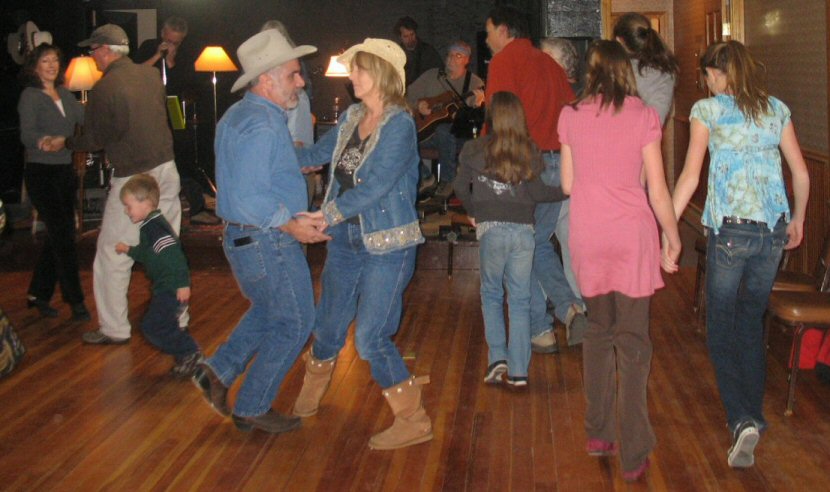
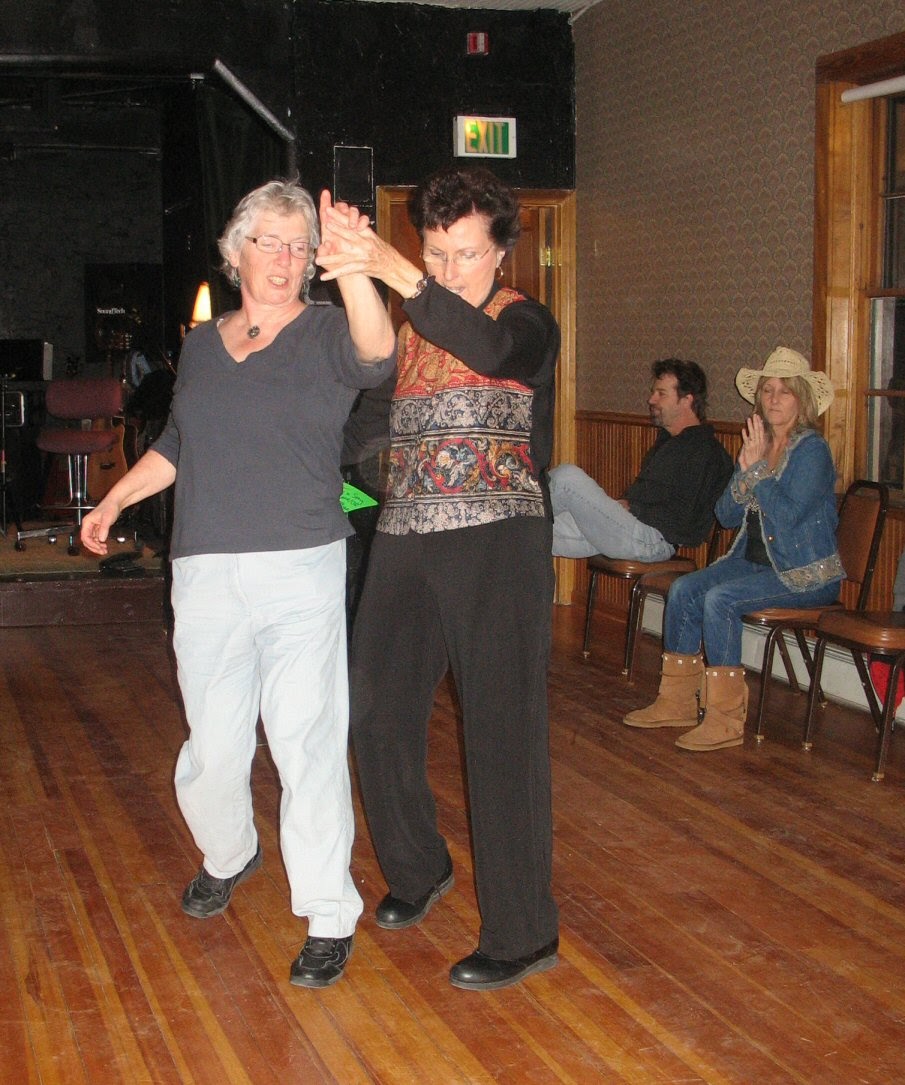
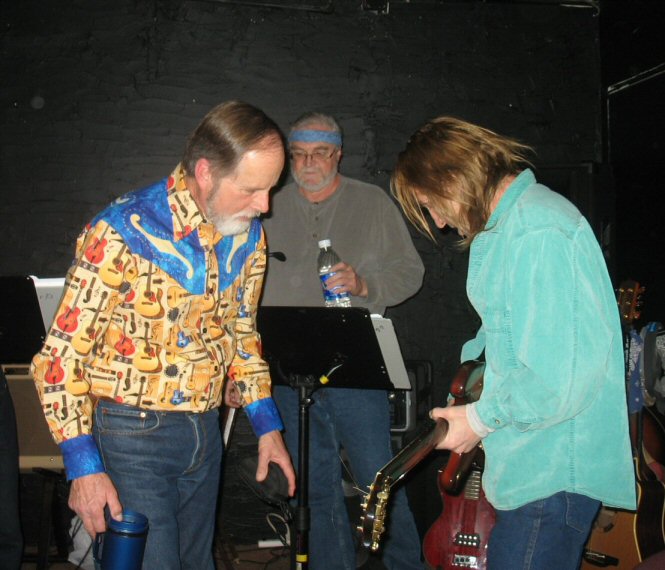
The Morrison Town Band is at it again! In what promises to become an annual tradition, they’ve announced this year’s Cabin Fever Dance, to be held January 30th at the Town Hall. Get your boots on and take a swirl across the floor! Free event; refreshments will be provided.
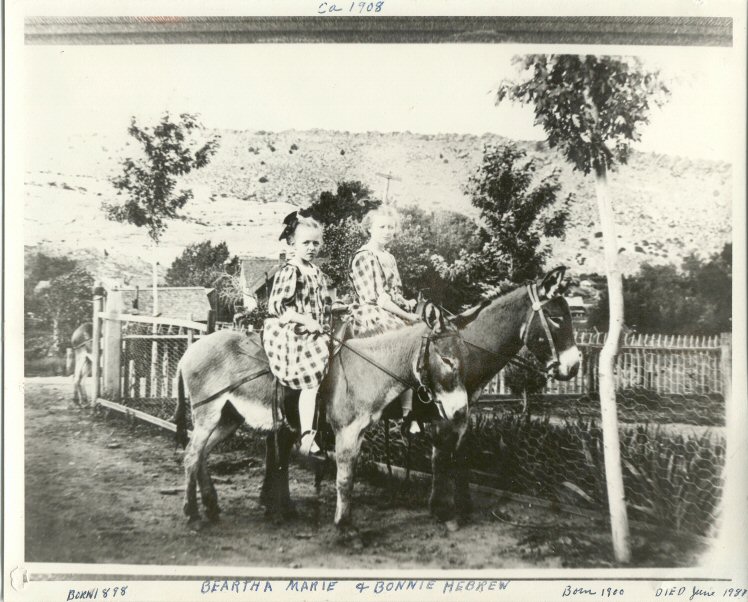
Sam Hebrew (1857-1932) and Nora Smith (1876-1947) started a long-term business serving tourists at the Gateway Stables, leading donkey trains into the scenic Garden of the Angels, known today as Red Rocks Park. Nora was the daughter of Jeremiah and Margaret (Healy) Smith, one of the original Morrison families.
Bertha Marie and Bonnie Hebrew, about 1908.
The Gateway Stables, founded by Sam and Nora Hebrew, provided access to Red Rocks Park via burro. Daughters Bertha Marie and Bonnie grew up on donkeys. Bertha lived in Morrison her whole life, taking over the family business and continuing to serve Morrison tourists. She married a Morrison boy, Curt LaGrow, and cooked homestyle meals for tourists and boarders.
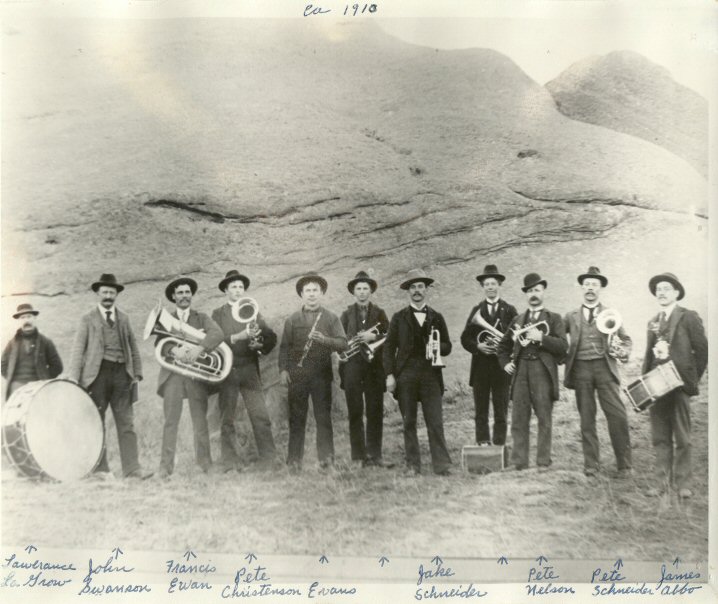
This gathering of musical talent represents a “who’s who” of early Morrison families, including the town’s innkeeper (2nd from left), shoemaker (4th), apothecary (7th), and livery owner (right). Others include several town fathers who were the first aldermen elected in 1906. From left, at Red Rocks, the Morrison Town Band in 1910: Lawrence LaGrow, John Swanson, Francis Ewan, Pete Christenson, Evans, unknown, Jake Schneider, unknown, Pete Nelson, Pete Schneider, and James Abbo.
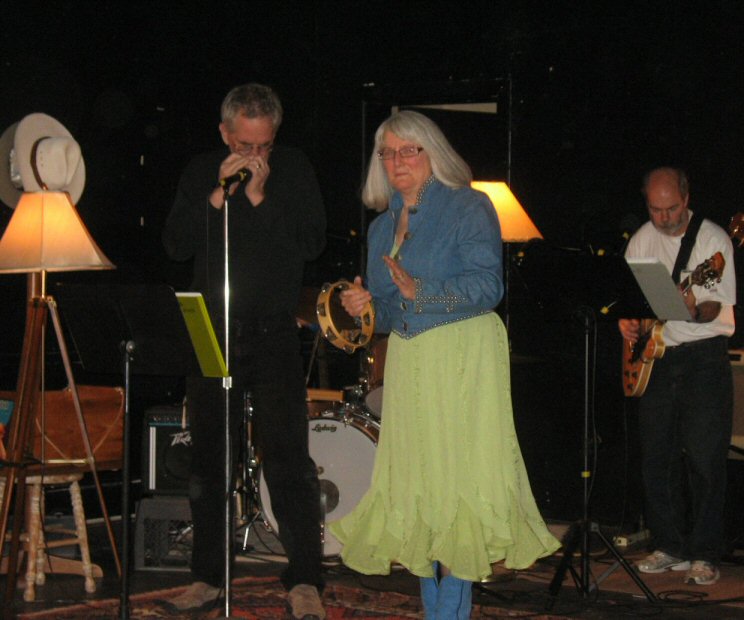
Today’s musicmakers, honoring the past, also call themselves the Morrison Town Band. Their performances are the highlight of town events, most recently the “Cabin Fever Dance” held January 31st. Left to right, Lucky, Jamee, and Chris on stage.
By the middle of the evening (above), the dance floor was crowded with lively town residents and guests of all ages. Most enjoyed a “freestyle” approach; Loren and Sue, center, were the couple to watch!
Before the festive evening got in full swing, dance instructor Lila (right) gave a few lessons to early comers. Here Margaret tries a two-step ahead of the crowd.
Walt sat in with the band a while, playing a custom guitar he built himself, which Gus is admiring as Steve looks on in the photo below.
More information on Morrison history is available at Jeffco Archives. Contact Archivist Ronda Frazier (rfrazier@jeffco.us) for access to the Morrison History Collection.




 Morrison History

