Tag Archives: millennial

Mayors’ Messages

During the last decades of the 20th century, Morrison’s mayors faced complex, and sometimes controversial, issues. A few of them left reports of some of the key happenings during their respective tenures, taking time to summarize their terms in office, saving us from wading through years of minute detail in Town Board minutes and other records. This post, of course, only scratches the surface.

Note: Some of the dates of service are subject to change. We’re still trying to sort it out as sources disagree.

Rolf Paul, Mayor 1980-1984; Trustee, 1974-1980, 1984-2000

Rolf Paul was a central figure in Morrison’s civic life from 1974 to 2000, dedicated to the Town’s well being and progress, but rarely without criticism or controversy. At the end of 1981 and again after 1982, he wrote summaries of significant events and progress in those years. Some of the projects he highlighted were:

  • Assumed operations of the town’s wastewater facility [previously managed by a special district], eliminating separate septic systems
  • Completed a Planning and Design Study by University of Colorado at Denver (UCD) students
  • Gave the Town Hall “a facelift” and oversaw its use by several civic groups, as well as the new Morrison Opera Company
  • Completed a $700M water project, replacing water mains and an old water tank and completing a raw water operational reservoir on Open Space near town
  • Looked forward to development of the Mitel Corporation’s $20 million facilities and employment boost to the area [this project did not materialize]
  • Entered into an agreement with the Mount Carbon Metropolitan District to treat water and wastewater in exchange for facilities improvements [an amended agreement dated 7/31/2025 is still in effect]
  • Worked with the town businesses and new Morrison Chamber of Commerce to sponsor parades, ‘big tent’ antique shows, art shows, pumpkin fests, etc.

In the 1981 summary, Paul wrote:

To the east of us within the next few years there will be a C-470 corridor, and the way in which the land just east of that corridor is utilized is of great concern both to Morrison and to the City of Lakewood. We are working with the City of Lakewood within the capabilities of both municipalities to do what we can to assure development that will prove to be an asset to both communities.

Sometimes it all seems somewhat overwhelming— so few people and so much to consider but we’ve been incorporated since 1906 and feel we really have something very “special” here, and I guess that’s what does keep us going.


Mary Gaylord, Mayor 1984-1990

The efforts Rolf Paul, Dick Scott, and others made to secure Morrison’s future in the preceding years led to a contentious election in 1984. Mary Gaylord ran against Paul, and won the mayor’s role by only 8 votes. After the election, the Rocky Mountain News reported that Gaylord ran on a campaign of making the town’s government ‘more open and less confrontational’:

“We’ll build bridges and get on with the business of the town,” she said. “I never really felt that what Rolf and I wanted for the town was that much different. The difference was in how we delivered the services.” Gaylord praised Paul’s role in putting together a $4.7 million water and sewer project, saying it gives the town some “bargaining chips it never had before.”

Gaylord inherited the job of carrying out the Mount Carbon agreement. Paul and Scott remained on the Board and, along with other Board members, continued to deal with the complexities it brought for years afterward.


Jim Jordan, Mayor 1990-1992; Trustee

During Jordan’s single term, the Town recruited new staff and hired outside bookkeeping services and a back-up sewer and water company. The latter was intended to relieve hard-working DeWayne Rhodig, who was Morrison’s jack-of-all-trades for many many years, from snowplowing to construction. In his resignation letter, Jordan wrote:

My primary effort as Mayor was to introduce a more business-like approach to governing Morrison. The Town now has a conscientious staff that not only maintains regular hours but also keeps compensation time to a minimum. …. I am proud of the fact that the Town Board has managed Morrison well.


Mary Poe, Mayor 1992-1998; Trustee, 1990-1992

In 1998, Mary Poe provided a three-page bullet list of key events and accomplishments (with dates) of the previous eight years, including:

  • Nixed the gambling proposal to bring casinos to Morrison (1992)
  • Negotiated with Bancroft Fire Dept. the land swap east of the Hogback for 321 Highway 8 property (new fire station for them, new town office for Morrison, 1992-1994)
  • Supported the efforts of volunteers… in getting MNHM [Morrison Natural History Museum] off the ground (1992 on)
  • Changed the image of Morrison from being a “Biker Town” to being a “Family Friendly Town” (1993)
  • Put Morrison businesses and attractions on the internet [first town website, 1997]
  • Annexed Cooley Gravel (1.5 years of intense negotiations, 1994-95) [to secure water storage]
  • Successfully completed the Town Hall Renovation, turning a ho-hum, rundown building into a building with style (1996)

She wrapped up the challenges of the job:

Most of these accomplishments required hours and hours of hard work and hard thought, even the one liners. Believe it or don’t, these are what I consider just the highlights of the past 8 years. Maintaining the charm of our small town as a great place to live, while keeping it economically viable is an incredible balancing act and requires constant attention. The Board has strived to do that in a responsible, careful, and yes, frugal manner.
Ginny Paul and the Country Store

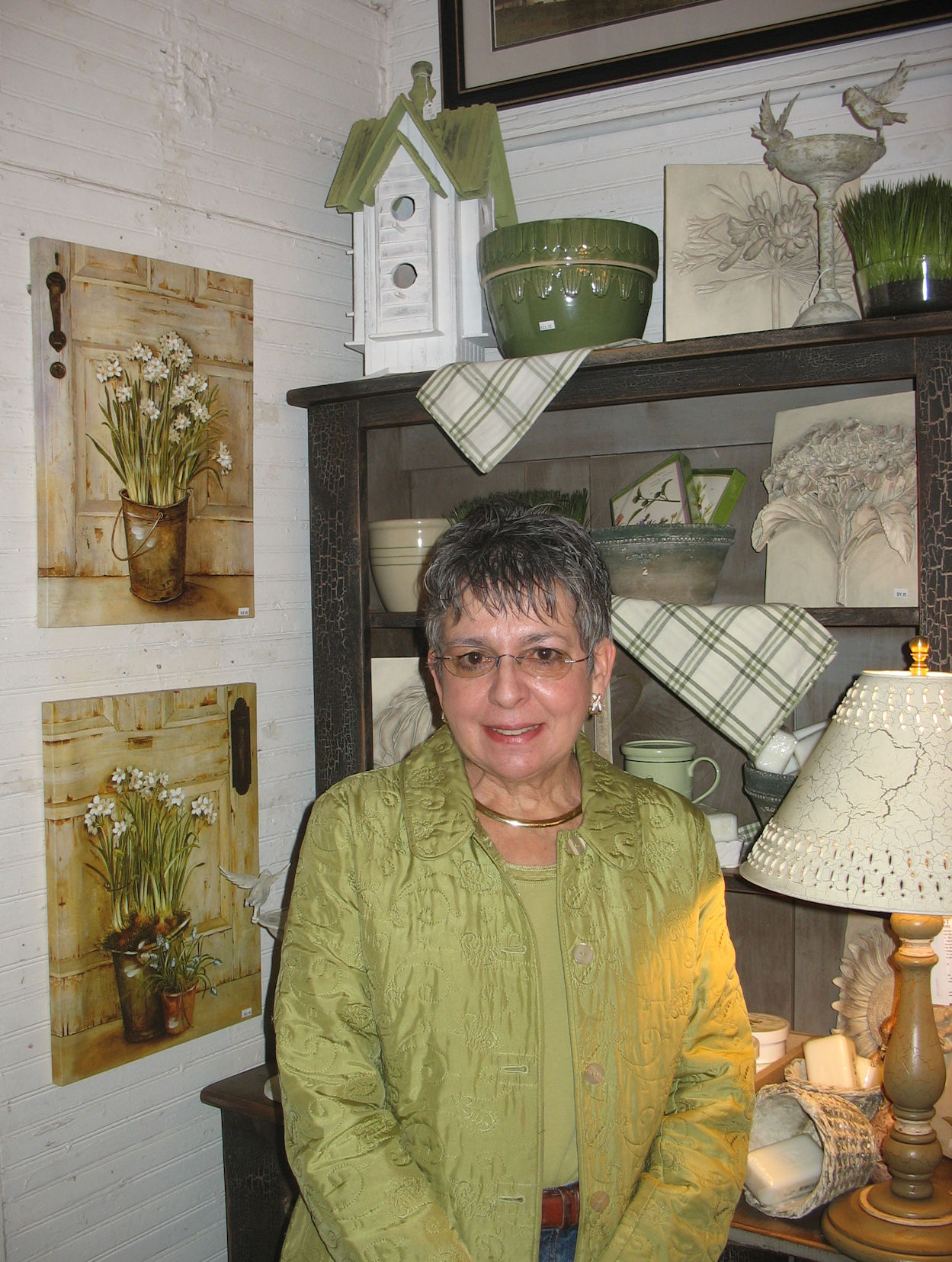
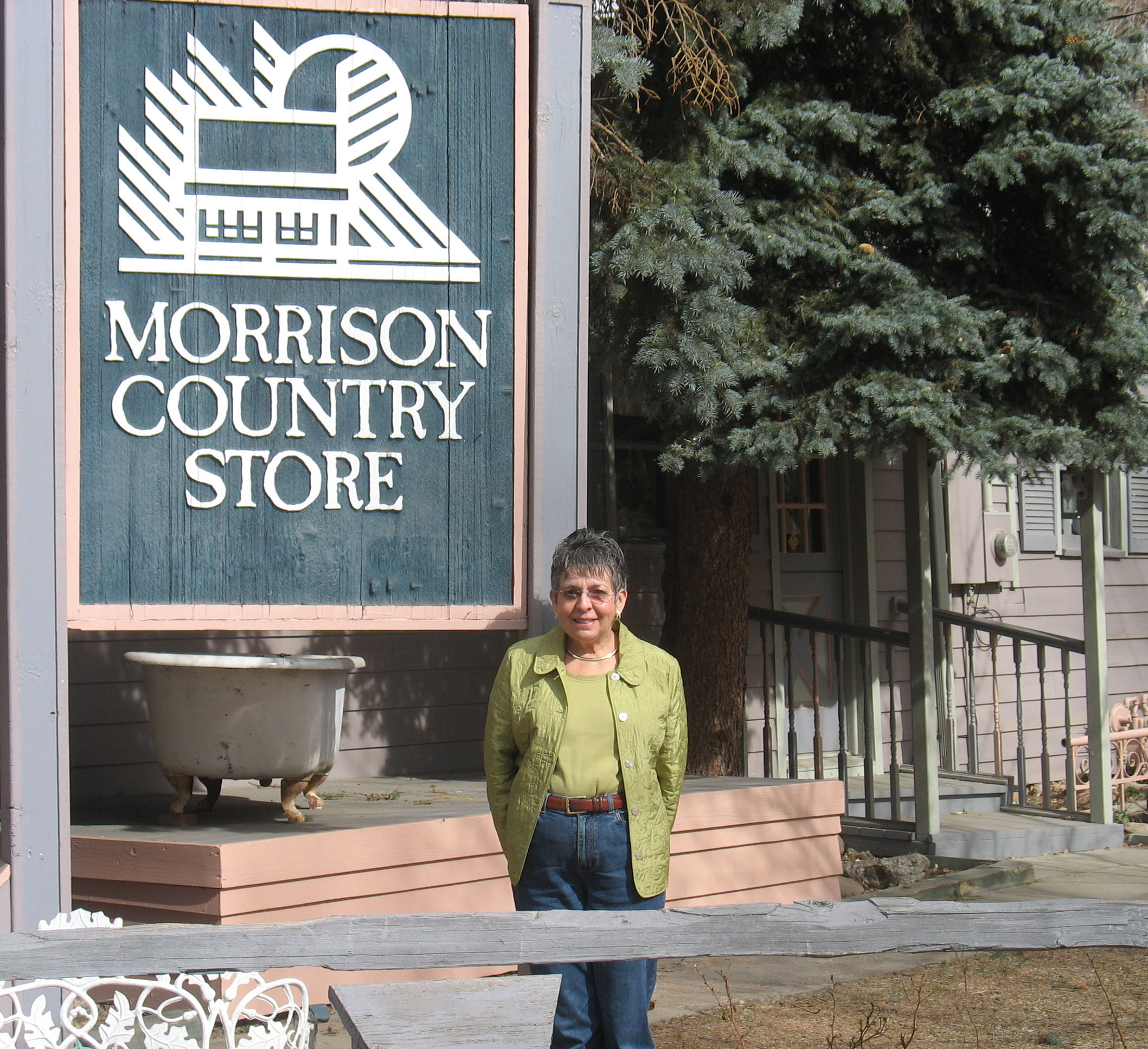
Ginny Paul standing next to the Morrison Country Store sign in 2009, with graphic logo designed by Rolf Paul.

Virginia Paul and her husband Rolf came to Morrison in 1969, where he set up a small printing business in their home. In 1984, she launched her own small business, the Morrison Country Store,* which would become one of the town’s lasting enterprises, drawing customers from across the metro area and beyond. I visited Ginny and documented her charming shop in these photographs in 2009.

Where Rolf was, Ginny writes, “an activist & a mover & a shaker” who served on the Town Board and even as Mayor for a time, she preferred to “stay out of all the controversy… and just be a good citizen.” And a very successful businesswoman, as evidenced by the longevity of the Morrison Country Store, a gift and décor oriented shop with a loyal clientele much like that once drawn by Thee Deacon’s Bench and the town’s many antique stores. The shop was closed in 2018, just two years before Ginny’s death in 2020.

Ginny at the Morrison Country Store in 2009. One of the plaques above her has a Helen Keller quote: "Your success and happiness lie in you."
Ginny at the Morrison Country Store in 2009. One of the plaques above her has a Helen Keller quote: “Your success and happiness lie in you.”

Despite Ginny’s reticence, she did end up serving on the Town Board for several years after Rolf’s death, where she was “an advocate and voice for local businesses.”

Ginny Paul standing with some of the displays at the Country Store, 2009.
Ginny Paul standing with some of the displays at the Country Store.

Rolf and Ginny supported cultural events and organizations in Morrison and beyond, including the Jefferson Symphony and the Morrison Natural History Museum.

Ginny considered the museum “a great addition to the Town” and a “gift of culture to the metropolitan area.”

Ginny Paul and her Morrison Country Store are well remembered by Morrison residents and long-time visitors. Today the Morrison Mercantile carries on some of Ginny’s legacy, in another form.

Quotes above are from Ginny’s letter to the Town Board in February 2002, shortly after Rolf’s death, when she was drawn into ‘controversy and turmoil’ and spoke her mind in response to an edition of Lew’s News.


Remembering Virginia (Ginny) Paul
(Morrison Hogback newsletter, October 2020)

We would like to remember the life of long-time resident, Ginny Paul. She was the definition of “Keep Morrison, Morrison” from her care and dedication to the Town, to her radiating entrepreneurial spirit and fruitful local business, Morrison Country Store. Ginny served her community well. She selfishly [sic] volunteered her time to the Planning Commission and Board of Trustees throughout her years. During Ginny’s time on the Board and Planning Commission, she was an advocate and voice for local businesses, an integral part in the Rooney Valley Development discussions and Town Comprehensive Plan update in 2008. Her insight as a resident and business owner allowed for a unique perspective that was appreciated and valued in the Boards’ policy making. Ginny will be greatly missed, and we send our sympathy to her friends and family. Morrison will not be the same without her.


* Actually, even before Ginny began her business, the location was known as the Morrison Country Store, run for many years by Tom and Bonnie Hicks, who specialized in antiques and collectibles.

Jeffco Archives Houses Morrison’s History

We’ve started a Morrison History Collection at Jeffco Archives!

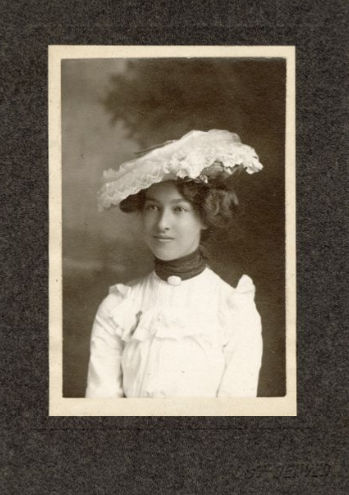
This miniature cabinet card with photo of Mabel Angevine was found in Nora Rooney Pike’s house in 2022. From Jeffco Archives.

In August 2024, county archivist Ronda Frazier finished organizing a motley collection of documents, photographs, and memorabilia sent to Jeffco Archives by historical researcher Sally White. Although this collection does not include all the older files and records gathered by long-time town historian Lorene Horton, it expands the scope with records from the decades since the National Register Historic District was designated in 1976. More than ten cubic feet of materials, 25 boxes!, touch on an array of subjects, including related local organizations such as the Lariat Loop, Dinosaur Ridge, Denver Mountain Parks, and Morrison’s Natural History Museum.

Many of the photographs and postcards have been scanned and are accessible in the Jefferson County Digital Archives by searching “Morrison” or other relevant keywords.

Although most of the collection is not online, Ronda has created a detailed finding aid that will enable seekers to review the contents of the collection. She has arranged the contents in eight series, including ephemera, photographs, scrapbooks, and an extensive postcard collection.

A few special items are in the collection:

  • Wesselman Family Papers: Includes photos of Morrison Pioneer Days, and family history information shared by Frances Ourada.
  • Morrison School Renovation: A collection of materials from Fred Putz, who purchased the old Morrison Schoolhouse in the 1960s to renovate it into a residence, gallery, and studio.
  • Morrison Cowboy Celebration: Programs, posters, photos, and records of this event in the late 1990s.

To access the items from the collection in person, you can make arrangements with Ronda by calling 303-271-8448 or emailing her at rfrazier@co.jefferson.co.us.

Help Grow the Morrison History Collection!

Old or even newer records and photos may be of interest as we seek to create a more complete record of the town’s past. The collection spans information from 1892 to 2022, but is not a complete record. History never stops, and new items are always being added. Jeffco Archives offers safe, secure storage and proper handling of older materials, as well as organizing them and making them accessible to researchers. Contact Ronda for more information on donating documents and photos to the Jeffco Archives.

Cowboy Celebration Revisited

Part 2: Documenting the Morrison Cowboy Celebration
(see Part 1: The First Morrison Cowboy Celebration)

Out of Morrison’s 150-year history, you could easily miss the Cowboy Celebration, which ran for only five years, 1996-2000. This month, we’ve spent some time refreshing our memories of these stirring days, when western singer-songwriters and cowboy poets graced the stage at the Morrison Town Hall. Thanks to the efforts of videographer Donna DiGiacinto, who recorded the 1996 and 1997 events, we can even give you a sample of what it was like to be there in person.

Historical Morrison Cowboy Gathering 1996 -97

Some of our performers have passed into history, others we’ve lost track of, and some you can find still working their trade today, sharing stories and songs of the Old West. Donna captured rare footage of legendary Pete Smythe at the 1997 celebration; he died in 2000. We lost Sean Blackburn, of mustache and musical fame, in 2005; Bill Barwick and Liz Masterson followed in 2017. Poet Dennis “Slim” Fischer died in 2023. We honor their legacy, and are happy to bring you a taste of their time on the Morrison stage.

Screenshot of the Cowboy Celebration home page, as displayed on the Morrison website in 2002.

We’ve also been retrieving the story of the celebrations, as it was reported on Morrison’s website at the time. Thank you, Internet Archive, for keeping these old pages accessible! Links below open in new tabs.

Morrison Cowboy Celebration Homepage, as of 2002 (pdf)

Selections from the 1996-97 Celebrations (video, 2:42:38 minutes)

1996 Celebration– a few photos (by Mary Jordan, pdf)

Review of 1998 Performances (pdf)

Summary of 1999 Celebration and Review of 1999 Performances (pdf)

Preview of Celebration for 2000 (pdf)

The First Morrison Cowboy Celebration

The Morrison Cowboy Celebration, so the story goes, was conceived early in 1996 when “uncle” Mel Justice was sitting around with a group of locals and sporting a mighty fine, rainbow-colored pair of suspenders. Bob Dougherty was on hand that night when a discussion about Mel’s suspenders led to his mention of a poem called “Billy Carpenter and Smith’s Elastic Braces.” Uncle Mel had never heard it. Bob recited it to Mel and all present, and the idea of a poetry gathering was born.

You can listen to one of Bob’s renditions of this poem at the Buckhorn Exchange here.

This inaugural event benefited from the talents of Mary Jordan, who convened a photo shoot at Teresa’s Holiday Bar (that archetypal Morrison saloon) that gave the event a lasting visual imprint. Performers, “saloon girls,” and one unnamed equine launched an image that rocked Morrison for five years running. Debby Mason and Roger Poe signed on as organizers; Patrick Gerace designed a logo and program artwork; and town businesses got involved as sponsors and advertisers. It was a community effort.

1996 performers gathered at Teresa’s Holiday Bar; Jerry Walker, Roz Brown, Bob Dougherty, Liz Masterson, Sean Blackburn. Also saloon girls with bar owner Kim Bianchi, cowboy Gary Gray, bartender Willie. Photo by Mary Jordan.

The Celebration was a major hit, even that first year! Bob rounded up a few of his friends and put together a show, held at the Morrison Town Hall in early September. Bob Dougherty himself acted as emcee, and other performers included Bill Barwick, Roz Brown, Liz Masterson & Sean Blackburn, Maggie Mae Sharp, and Jerry Walker. You can sample the flavor of the event in these videos by reader Donna DiGiacinto:

My Prairie Home, by Liz Masterson and Sean Blackburn,
with stagecoach scenes in Morrison

Gotta Have a Mustache, by Sean Blackburn

Three songs by Bill Barwick: Only in His Mind,
You Don’t Need That Cowgirl, Hold Me Gently

According to a later report (we’re pulling from the old website here):

Maybe we should start with what the Morrison Cowboy Celebration is NOT. It isn’t a weekend-long festival of all things cowboy. No pony rides, no chuckwagon cookouts. No rodeo. At least, not yet. You won’t find a whole lot of fringe and glitter, but lots of worn jeans and working cowboy hats. It is two grand evenings of some of the best and most diverse cowboy music and poetry you’ll find under one roof at one time. Two evening performances offering a great value for your entertainment dollar. (Because of the small size of the Morrison Town Hall, advance tickets are strongly recommended.)

Australian-born emcee Bob Dougherty entertained audiences with classic cowboy poetry and loud shirts at the Morrison Cowboy Celebration. Photo by Mary Jordan.

As Morrison’s resident (via Australia) cowboy poet, Bob became the emcee and focal point, known as well for his loud cowboy shirts as for his Down-Under-inflected poetry. Bob was once profiled in Westword, whence this introduction:

In the evening, Bob Dougherty works behind the bar at Theresa’s Holiday Bar in Morrison. Dressed all in black, his long gray hair pulled back severely from his face, a cigar clamped between his teeth, he will look up from the taps and say something terse and Western, such as: “Hello, trouble.” He will say this with an Australian accent.

Dougherty is a mass of details: tattoos, earrings, the Three Tenors on CD, an ability to converse in Thai, wine snob, baseball fanatic, extra in the film The Man From Snowy River—”my derriere, anyway”—and, sentimental fool that he is, a tendency to shower women with red roses and Swiss chocolate. —from The Odd Couplet BY ROBIN CHOTZINOFF, Westword, May 23, 1996

At the end of the two evenings, performers launched a tradition for the event by gathering onstage for a rendition of “Happy Trails” to send their audience home on a high note.

Part 1 of ?? Read Part 2 here.

A New Home for the Cox Cabin

See Part 1 of this story here.

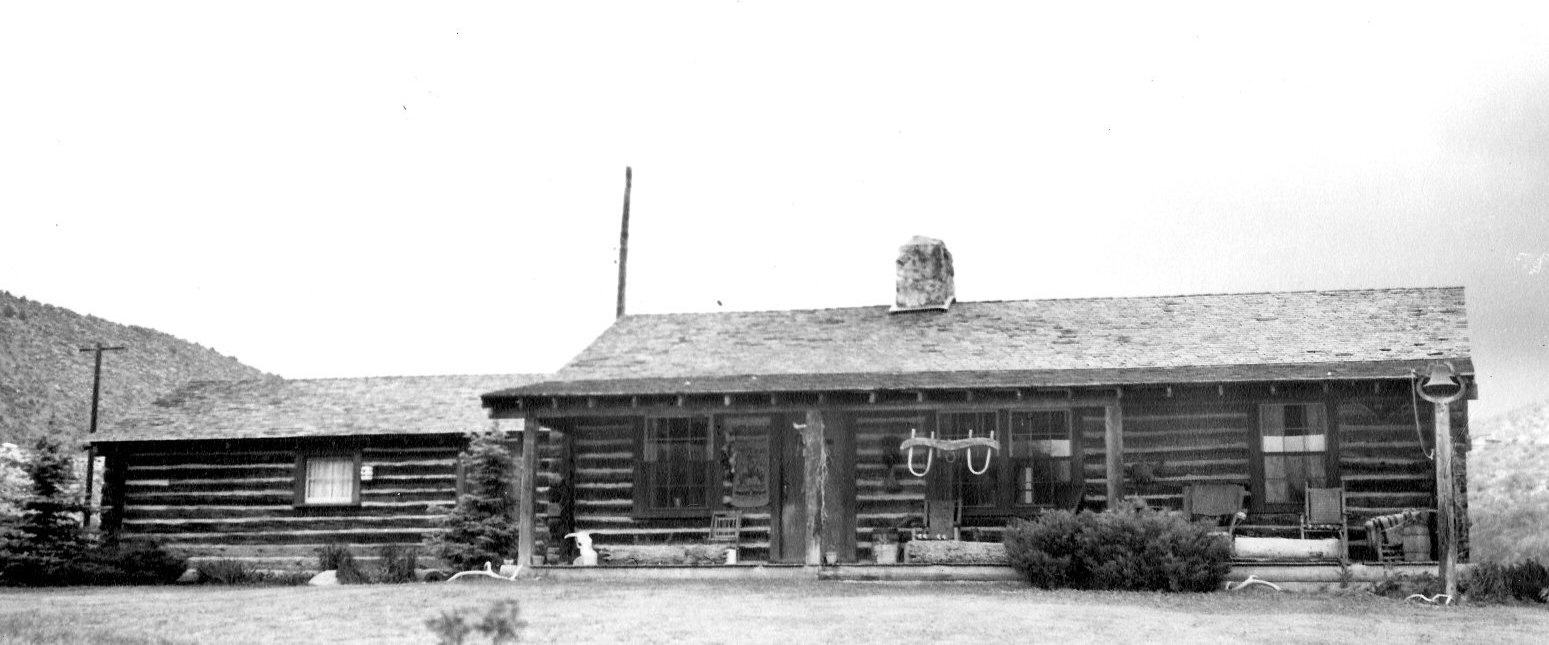
The Cox Cabin, date unknown.

The Cox Cabin, date unknown.

We’ll pick up where we left off, with Town Manager Carol O’Dowd’s account of her meeting with Lee Cox:

We reminisced about his life and how to save his home, now in the new state highway right-of-way. I offered the idea of using his cabin for a town museum. He liked the idea and approved. Lee died soon after he and his relatives gave the necessary signatures; he died comforted by knowing that his log home would live on as Morrison’s natural history museum….

Then came the challenge of moving the cabin. The Highway Department guys had a soft spot for Morrison and maybe for me—I had taken some pretty serious razzing from them in meetings where I was the only woman in a room with 20 engineer-type males. They gave us the cabin and 10 days to move it before the bulldozers arrived. Robin Smith helped me find a house-moving company just in time.”

Meanwhile, retired USGS paleobotanist and Town Board member Dick Scott had convinced the Town Board that a natural history museum, especially a free building complete with himself as free paleontologist-director, would be a great asset for Morrison. He writes:

“We picked out a site on Morrison’s 80-acre Designated Open Space at the south edge of town. The spot was next to the highway and on a hillside where a basement would double our space. Jack-of-all trades DeWayne Rhodig fired up the town backhoe.

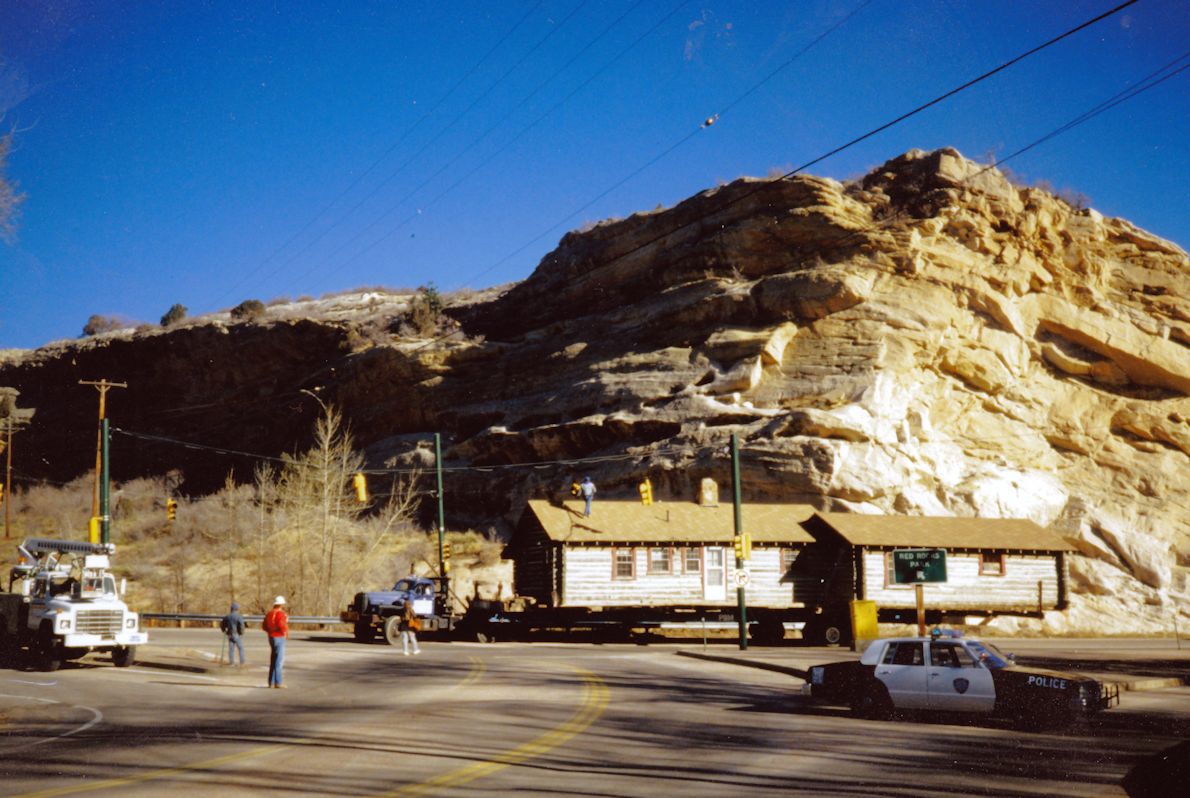
The moving company slid long steel beams and wheels under the cabin. Early one Saturday morning a bulky procession led by our lone police car crawled down Morrison’s main street, lumbered around the left turn southward across Bear Creek, and inched its way into position above DeWayne’s excavation. Later, DeWayne constructed basement walls underneath. Lee Cox’s cabin then became the Morrison Natural History Museum…”

Cox Cabin on the move through Morrison in December 1987.

Cox Cabin on the move through Morrison in December 1987.

More from Dick Scott’s notes on Morrison’s late 20th-century history:

A few pages back we left the Cox cabin perched on steel beams over a hole in the hillside, awaiting conversion to be the Morrison Museum. Why start a museum? I had multiple reasons to believe in the project. First, Morrison’s unique role in the history of paleontology certainly justified a museum. Second, the museum’s visitors could bring needed dollars to our restaurants and shops. Third, the museum as an informal teaching tool could broaden children’s interest in science and nature through their strong fascination with dinosaurs. It was worth a try.

Arthur Lakes’s discovery of dinosaur bones north of Morrison in 1877 earned the small town a significant spot in history. Before the Morrison Museum formally opened, interest was arising in another kind of dinosaur fossils. When Alameda Parkway was extended over the Dakota hogback in 1937 by WPA workers, dinosaur tracks were uncovered along its route.

The east-side road cut through the steeply dipping Dakota sandstones, exposing large surfaces bearing ripple marks and literally hundreds of dinosaur tracks… Then reports surfaced about people digging up the tracks and stealing them. As the Morrison Museum began to take shape, Denver’s Metropolitan State University professor Dr. Martin Lockley, a dinosaur track expert, expressed concern about theft and destruction of these tracks. His concern led to the forming of the Friends of Dinosaur Ridge. The origins of the Morrison museum and the Friends were intertwined.

The early history of the Morrison Natural History Museum is tied to that of the Friends of Dinosaur Ridge, who aimed to protect the dinosaur tracks and educate the public about them. Dick Scott served as the first director of both entities, and the Friends initially met at the unfinished museum, which remained their headquarters until about 1993.

About Cider Fest 2010

September 25 from 10 a.m. to Dusk
Grounds of Bear Creek Nursing Home,
Highway 8 and Summer Street
Morrison, CO, 80465

Free- make your own cider on “Apple Annie’s” historic cider presses — bring your own apples and empty beverage containers; bake sale by Red Rocks Elementary; horsehoe contest (register by 10:30am) by VFW Post 3471; car show by gocatspeedshop.com; ; live music at 2, 4 and 6 by Morrison Town Band and The Barley Bros./Holiday Bar.

Vendors include food by the Blue Cow, Smokin Yard’s BBQ, Pizza Casa, the Town of Morrison, Morrison Liquors, and the Morrison Action Committee; and a beer tent by VFW Post 3471.

And more: jumping castle by Mutual Of Omaha Bank; pedal tractors by Red Rocks Baptist Church; hay rides by Bear Creek Stables/Holiday Bar; climbing wall by the National Guard; massage by Lynn Downer’ Wood Art; women’s clothing by “Giddy Up” and others; wool purses by Susan; aprons and jewelry by Sally & Laurie; Beauty Control Cosmetics; Teddi’s Creations & Collectibes; Loose Ends Fiber Farm; and more!

Thanks to our Corporate Sponsors: Mutual of Omaha Bank, Canyon Tack & Feed, Bandimere Speedway, Aggregate Industries, Café Prague, Flights Wine & Coffee Bar, Morrison Natural History Museum Foundation, Morrison Carworks, Morrison Holiday Bar, West Chamber/Rooney Valley, Billfest Leonard, the Town of Morrison, and others.

Also we wish to acknowledge the following the following for their generous in-kind contributions: Bear Creek Stables, VFW Post 3471, Bear Creek Nursing Home, Red Rocks Baptist Church, Chambers Consulting, Maja Stefansdottir Agency, Billy’s Home Cooking, Bear Creek Development, Morrison Liquors, Budweiser Beer, Scramble Campbell, Kathy Wages, gocatspeedshop.com, Red Rocks Elementary School, The National Guard, the Morrison Action Committee, the Morrison Town Band, and all of the Ciderfest volunteers.

Cabin Fever Strikes Again!

From January 2010.

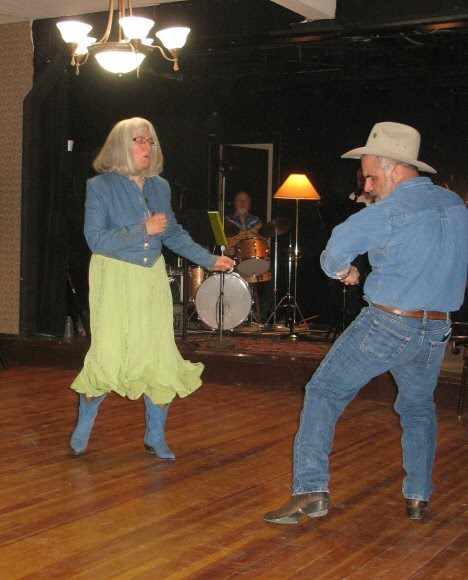
The Morrison Town Band is at it again! In what promises to become an annual tradition, they’ve announced this year’s Cabin Fever Dance, to be held January 30th at the Town Hall. Get your boots on and take a swirl across the floor! Free event; refreshments will be provided.

To review last year’s Cabin Fever highlights, see our post on the Morrison Town Band.

Return of the Bell

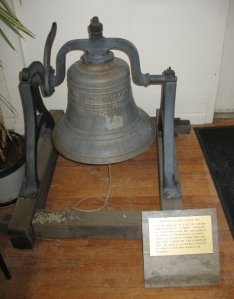
Morrison acquired its first school building in 1875, and it was used as a school until about 1955. This beautiful sandstone building had, as traditional, a school bell in a “belfry” on top. Sometime after 1955, the building was vacant, the bell mysteriously disappeared, and the belfry itself was soon removed. (See before and after photos at the link above.)

In 2006, just in time for Morrison’s centennial celebration, the bell came home. After some negotiation by Dan Rohrer, the town borrowed it from the International Bell Museum in Evergreen, where it had come to reside. The loan was extended after the Bell Museum’s proprietor, Winston Jones, died in August 2006. Last year, the town arranged to acquire the bell from the beneficiaries of Winston’s 6,000-bell collection. A few other historic Colorado bells were also repatriated, but most of the collection has gone to a new home at Hastings College in Hastings, Nebraska. (Click photos to enlarge.)

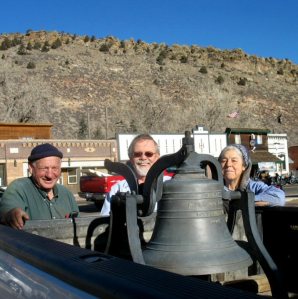
On Wednesday, I ran across the bell again while it was awaiting a new installation back home in Morrison. Here, DeWayne, Jerry, and Marcie contemplate the 240-pound bell in the back of a town pickup, making plans for its relocation near the town’s new mural and interpretive kiosk along Mt. Vernon Creek at main street (Bear Creek Avenue).

Yesterday, Jerry kindly sent this photo of the bell in its new home above the Mt. Vernon Creek bridge on the Bear Creek Trail. He promises step-by-step photos soon. If you get a chance, go by and welcome the old bell back to its hometown, if not its rightful spot!

Mural in Morrison is now complete

Reposted in April 2025 from a Lariat Loop blog that is no longer active.

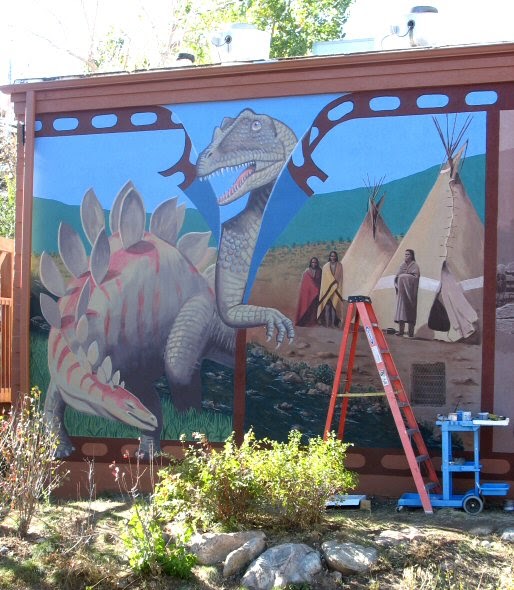
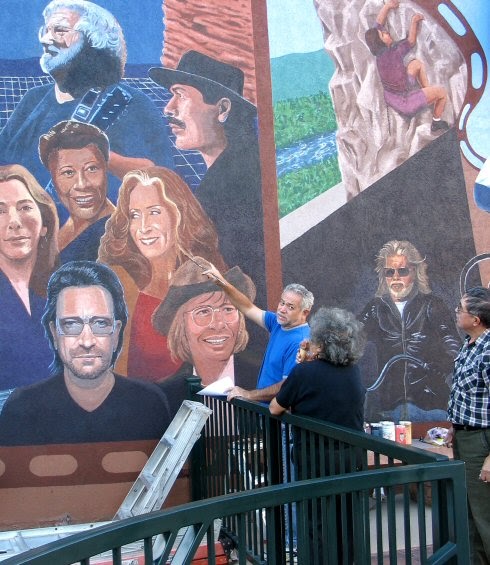
The historic mural by Emanuel Martinez, commissioned by the Lariat Loop Heritage Alliance, is now finished. Last week, Emanuel put a few finishing touches on the early panels, including Morrison’s famous dinosaurs shown here, and ended his work on the last two panels.

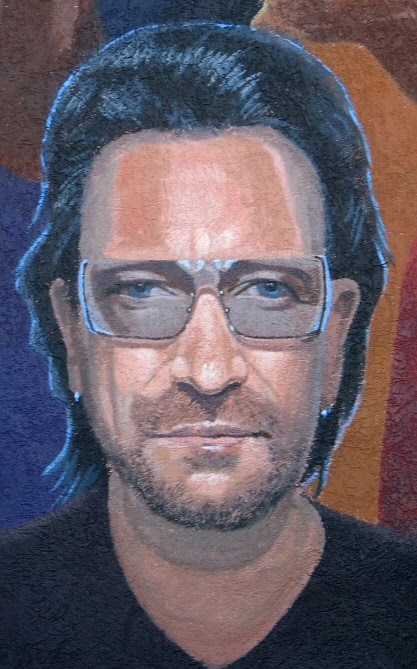
Noted performers from Red Rocks are a real attraction, with passersby often stopping to talk with Emanuel while he worked, as here. His image of Bono, of the band U2, is especially striking.

Later this fall, an interpretive panel identifying the characters and stories in the mural will be mounted on the wall at the lower right.