Tag Archives: midcentury

Mayors’ Messages

During the last decades of the 20th century, Morrison’s mayors faced complex, and sometimes controversial, issues. A few of them left reports of some of the key happenings during their respective tenures, taking time to summarize their terms in office, saving us from wading through years of minute detail in Town Board minutes and other records. This post, of course, only scratches the surface.

Note: Some of the dates of service are subject to change. We’re still trying to sort it out as sources disagree.

Rolf Paul, Mayor 1980-1984; Trustee, 1974-1980, 1984-2000

Rolf Paul was a central figure in Morrison’s civic life from 1974 to 2000, dedicated to the Town’s well being and progress, but rarely without criticism or controversy. At the end of 1981 and again after 1982, he wrote summaries of significant events and progress in those years. Some of the projects he highlighted were:

  • Assumed operations of the town’s wastewater facility [previously managed by a special district], eliminating separate septic systems
  • Completed a Planning and Design Study by University of Colorado at Denver (UCD) students
  • Gave the Town Hall “a facelift” and oversaw its use by several civic groups, as well as the new Morrison Opera Company
  • Completed a $700M water project, replacing water mains and an old water tank and completing a raw water operational reservoir on Open Space near town
  • Looked forward to development of the Mitel Corporation’s $20 million facilities and employment boost to the area [this project did not materialize]
  • Entered into an agreement with the Mount Carbon Metropolitan District to treat water and wastewater in exchange for facilities improvements [an amended agreement dated 7/31/2025 is still in effect]
  • Worked with the town businesses and new Morrison Chamber of Commerce to sponsor parades, ‘big tent’ antique shows, art shows, pumpkin fests, etc.

In the 1981 summary, Paul wrote:

To the east of us within the next few years there will be a C-470 corridor, and the way in which the land just east of that corridor is utilized is of great concern both to Morrison and to the City of Lakewood. We are working with the City of Lakewood within the capabilities of both municipalities to do what we can to assure development that will prove to be an asset to both communities.

Sometimes it all seems somewhat overwhelming— so few people and so much to consider but we’ve been incorporated since 1906 and feel we really have something very “special” here, and I guess that’s what does keep us going.


Mary Gaylord, Mayor 1984-1990

The efforts Rolf Paul, Dick Scott, and others made to secure Morrison’s future in the preceding years led to a contentious election in 1984. Mary Gaylord ran against Paul, and won the mayor’s role by only 8 votes. After the election, the Rocky Mountain News reported that Gaylord ran on a campaign of making the town’s government ‘more open and less confrontational’:

“We’ll build bridges and get on with the business of the town,” she said. “I never really felt that what Rolf and I wanted for the town was that much different. The difference was in how we delivered the services.” Gaylord praised Paul’s role in putting together a $4.7 million water and sewer project, saying it gives the town some “bargaining chips it never had before.”

Gaylord inherited the job of carrying out the Mount Carbon agreement. Paul and Scott remained on the Board and, along with other Board members, continued to deal with the complexities it brought for years afterward.


Jim Jordan, Mayor 1990-1992; Trustee

During Jordan’s single term, the Town recruited new staff and hired outside bookkeeping services and a back-up sewer and water company. The latter was intended to relieve hard-working DeWayne Rhodig, who was Morrison’s jack-of-all-trades for many many years, from snowplowing to construction. In his resignation letter, Jordan wrote:

My primary effort as Mayor was to introduce a more business-like approach to governing Morrison. The Town now has a conscientious staff that not only maintains regular hours but also keeps compensation time to a minimum. …. I am proud of the fact that the Town Board has managed Morrison well.


Mary Poe, Mayor 1992-1998; Trustee, 1990-1992

In 1998, Mary Poe provided a three-page bullet list of key events and accomplishments (with dates) of the previous eight years, including:

  • Nixed the gambling proposal to bring casinos to Morrison (1992)
  • Negotiated with Bancroft Fire Dept. the land swap east of the Hogback for 321 Highway 8 property (new fire station for them, new town office for Morrison, 1992-1994)
  • Supported the efforts of volunteers… in getting MNHM [Morrison Natural History Museum] off the ground (1992 on)
  • Changed the image of Morrison from being a “Biker Town” to being a “Family Friendly Town” (1993)
  • Put Morrison businesses and attractions on the internet [first town website, 1997]
  • Annexed Cooley Gravel (1.5 years of intense negotiations, 1994-95) [to secure water storage]
  • Successfully completed the Town Hall Renovation, turning a ho-hum, rundown building into a building with style (1996)

She wrapped up the challenges of the job:

Most of these accomplishments required hours and hours of hard work and hard thought, even the one liners. Believe it or don’t, these are what I consider just the highlights of the past 8 years. Maintaining the charm of our small town as a great place to live, while keeping it economically viable is an incredible balancing act and requires constant attention. The Board has strived to do that in a responsible, careful, and yes, frugal manner.
Pioneer Days in Review

Pioneer Days celebrations in Morrison are part of what we might call its modern history– a period from the mid-20th century onward that wasn’t as well documented by the town’s historic researchers. When interest in the town’s history bloomed in the mid-1970s, the 1940s-50s were too recent and still well remembered by residents.

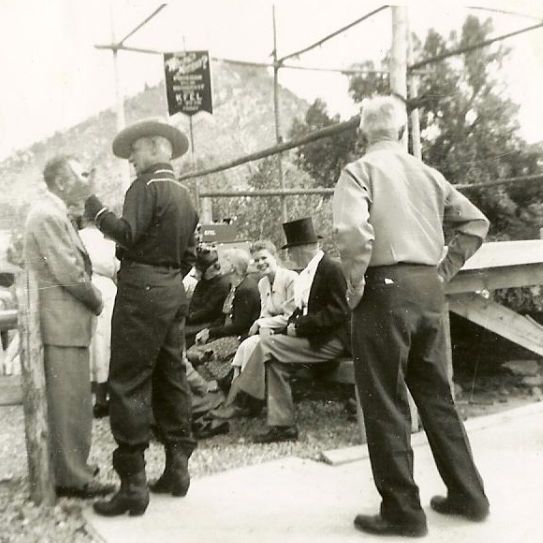
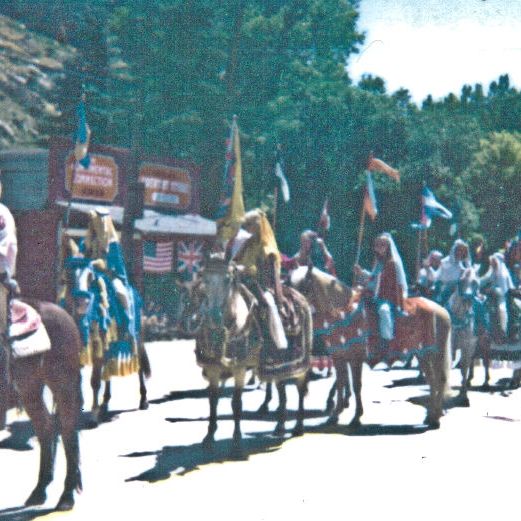
This post is an initial attempt to piece together some of the story of these town celebrations, the first of which took place in 1948. In their heyday, they drew hundreds from a wide area to the tiny town for a day or a weekend reminiscing about those “good ol’ days” past when Morrison was a rough-and-tumble town of the old West. Standard features included a parade, designation of a Pioneer Queen, and, often, a buffalo barbecue. We have sparse info on these events, so we’d love to hear from you if you have stories to share.

At some point, likely after the “revival” of the 1970s, the event was renamed Morrison Day(s), and papier maché dinosaurs even got into the act.

1948: A New Event in Town

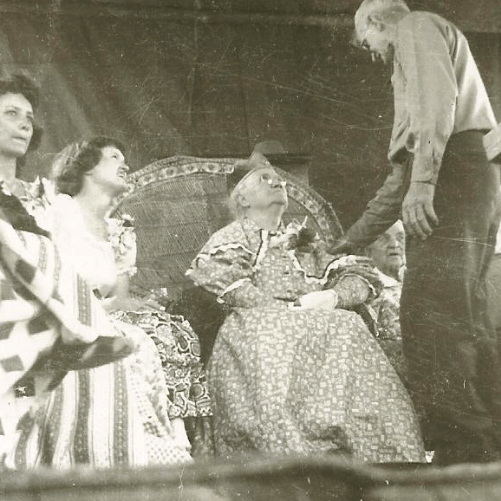
According to the Rocky Mountain News, the first celebration, on August 23, 1948, was to honor the living pioneers of the town. Festivities began at 10 a. m. with games and contests and were highlighted by a parade at 6 p. m. Mrs. Maggie Crow, pioneer resident who drove a mail coach from Mt. Morrison to Conifer, led the parade from the Pratt and Rooney Ranch through the town. The program was climaxed by a buffalo barbecue sponsored by the Denver Mountain Parks. Proceeds from the event were planned for use to purchase new fire-fighting equipment for the community.


July 30, 1949:

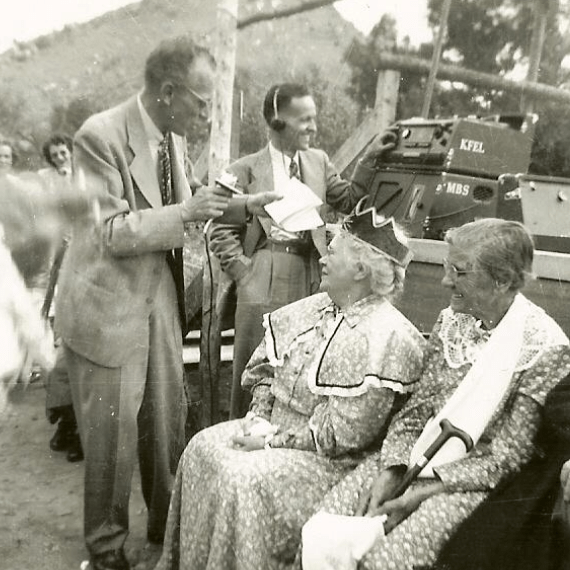
More than 2,500 people from more than a dozen states flocked to Morrison for its Second Annual Pioneer Days celebration, the Rocky Mountain News reported. The parade included 200 mounted horsemen and a couple dozen floats and hayracks. The event featured a retelling of the “deadly duel in Morrison,” a story from 70 years earlier.

Mrs. Effie Mae Knoll, 72, was crowned Queen on the basis of her “colorful” pioneer background. Mrs. Knoll’s parents, John and Nancy Groom, came to Colorado in 1875 in a covered wagon and homesteaded in Turkey Creek canyon, where they freighted logs and ties to Morrison with oxen and horse teams. Effie grew up as one of eleven children in the Groom family before marrying James Knoll and raising her own 14 children in Morrison. Click to enlarge photos and show captions.


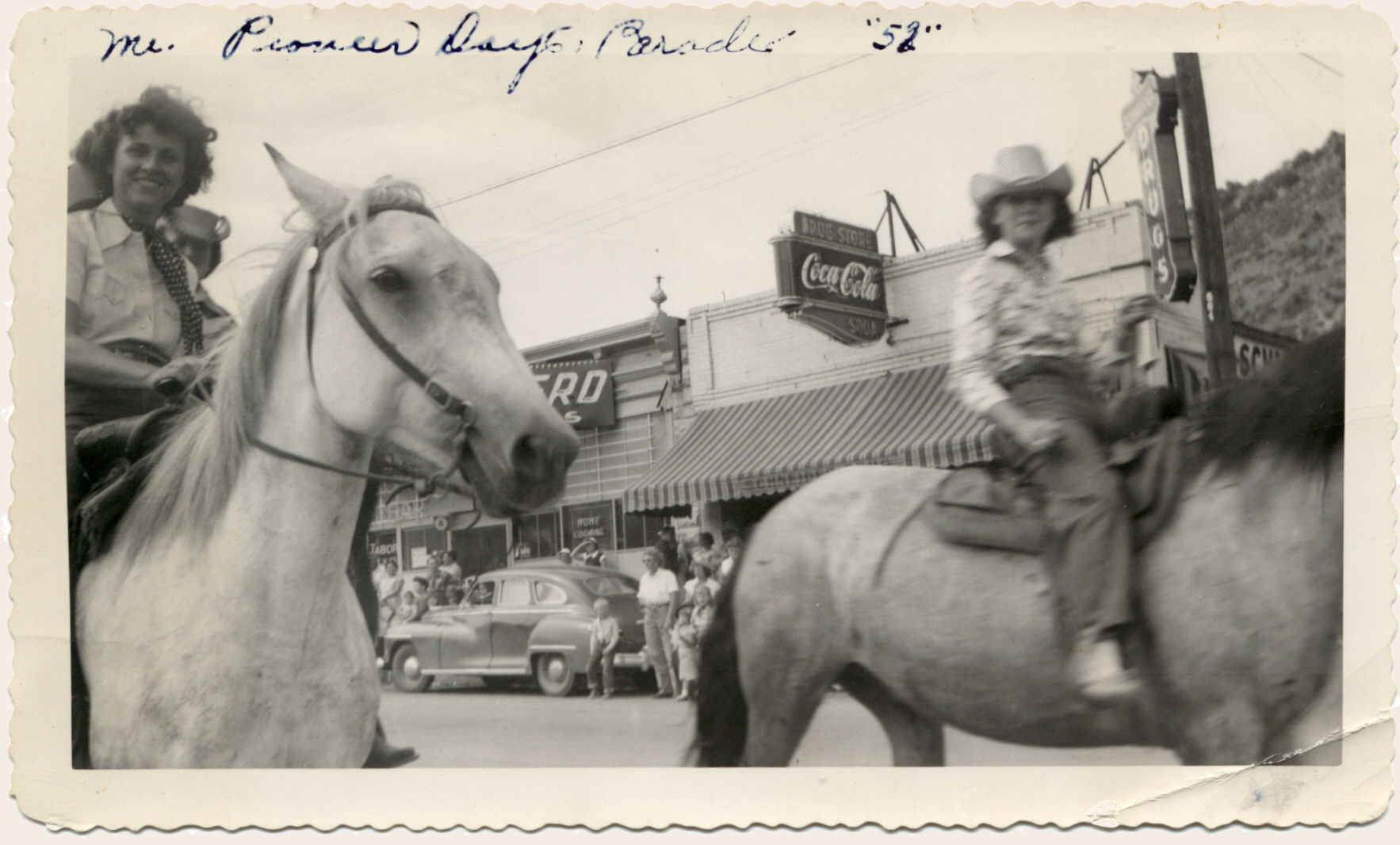
Two young ladies riding in the Pioneer Days parade, 1952.

July 31, 1954:

The Morrison Boosters Club sponsored the festival this year. Mrs. Molly Pike was the designated Queen of the event and led the parade that opened the festivities. Attendees enjoyed a pie-eating contest, dancing, horseshoe pitching, and a talent show. A highlight of the day was a buffalo barbecue arranged by the Westwood Lions Club. Kids enjoyed a field day organized by the Mountain Valley Recreation Association.


August 16-17, 1975: Pioneer Days Revived

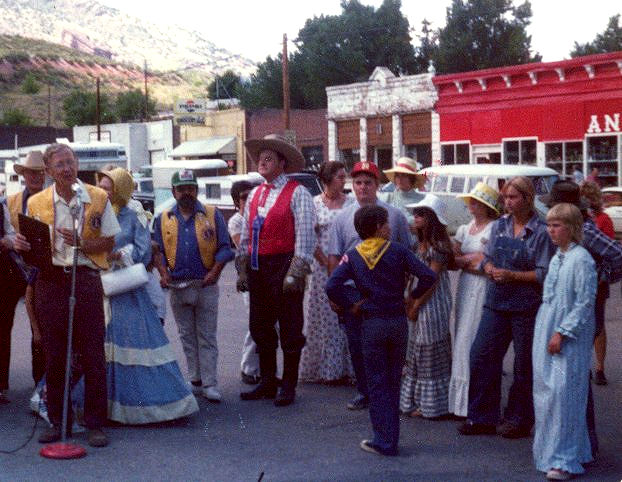
Red Rocks Lions (gold vests) and others gather to participate in the 1975 Pioneer Days.

“Return with us now to those thrilling days of yesteryear…” wrote the Canyon Courier in promoting the revival of Morrison’s Pioneer Days. The weekend-long event owed its return to the Centennial/Bicentennial enthusiasm that gripped the state in the mid-1970s. Clifford Morrison, great grandson of town founder George Morrison, presided, and activities included an art show, a parade, an historical walking tour, and a flag ceremony.


August 22, 1976:

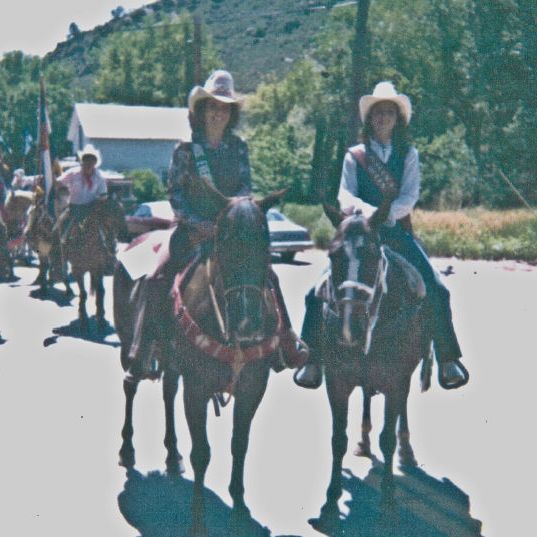
Lifelong Morrison resident Bertha LaGrow Stickler was Queen of Pioneer Days this year. Mayor Gail Molinaro presided over the event, which featured contributions from Westernaires; Red Rocks Lions Club, parade organizers; and the VFW Color Guard. Click to enlarge photos and show captions.


July 11, 1981:

The Morrison Chamber of Commerce sponsored this year’s event, which started with an old-fashioned western parade from the west end of town, winding through the main street, up Stone Street to Mount Vernon Avenue to the east side of town, then turning west again on the main street. A “2nd annual” bluegrass fiddle contest and black-powder shooting matches were other activities. The day wrapped up with a country western street dance in the heart of town. “Founded in the 1860s,” the Golden Transcript reported (July 7, 1981), “Mount Morrison is truly an early frontier Colorado town with many of its original buildings still very much in use today.”

Memorable Buffalo Barbecues

From reader Yvonne (in 2022):

One of the events that took our family to Morrison (other than travel to Denver) were the buffalo barbecues, sponsored (if I remember correctly) by the volunteer fire department, which was the beneficiary of one of the “surplus” buffalo from the group raised on the property now bisected by I-70. [Genesee Mountain Park, part of Denver Mountain Parks] The long side of the road across from Tabor Bar was a dirt parking area, just west of the quonset hut, and a huge, huge hole was dug in that parking lot where the fire was built and the buffalo barbecued. I don’t know for how long, but the result was a huge feast where the whole town turned out. Morrison has changed so much, but I never go through there without looking at the ghost of the parking lot and remembering the barbecues!


Buffalo herd at Genesee Mountain Park. Cows and calves, spring 2015. Photo by SL White.

The rest of the story: By 1938, Denver’s buffalo (or bison) herds had grown to numbers that threatened to overwhelm the land available for them. The city started donating or selling extra animals– the previous year’s calves– to interested parties, from individuals to organizations and restaurants. By the 1960s, they had set up a formal auction every spring; money raised helped balance the cost of maintaining the herds.

Construction Boom Hits Morrison

Red Rocks Vista Drive, 1962

From the Morrison Messenger, June 2002
Photos courtesy of Jack Jones

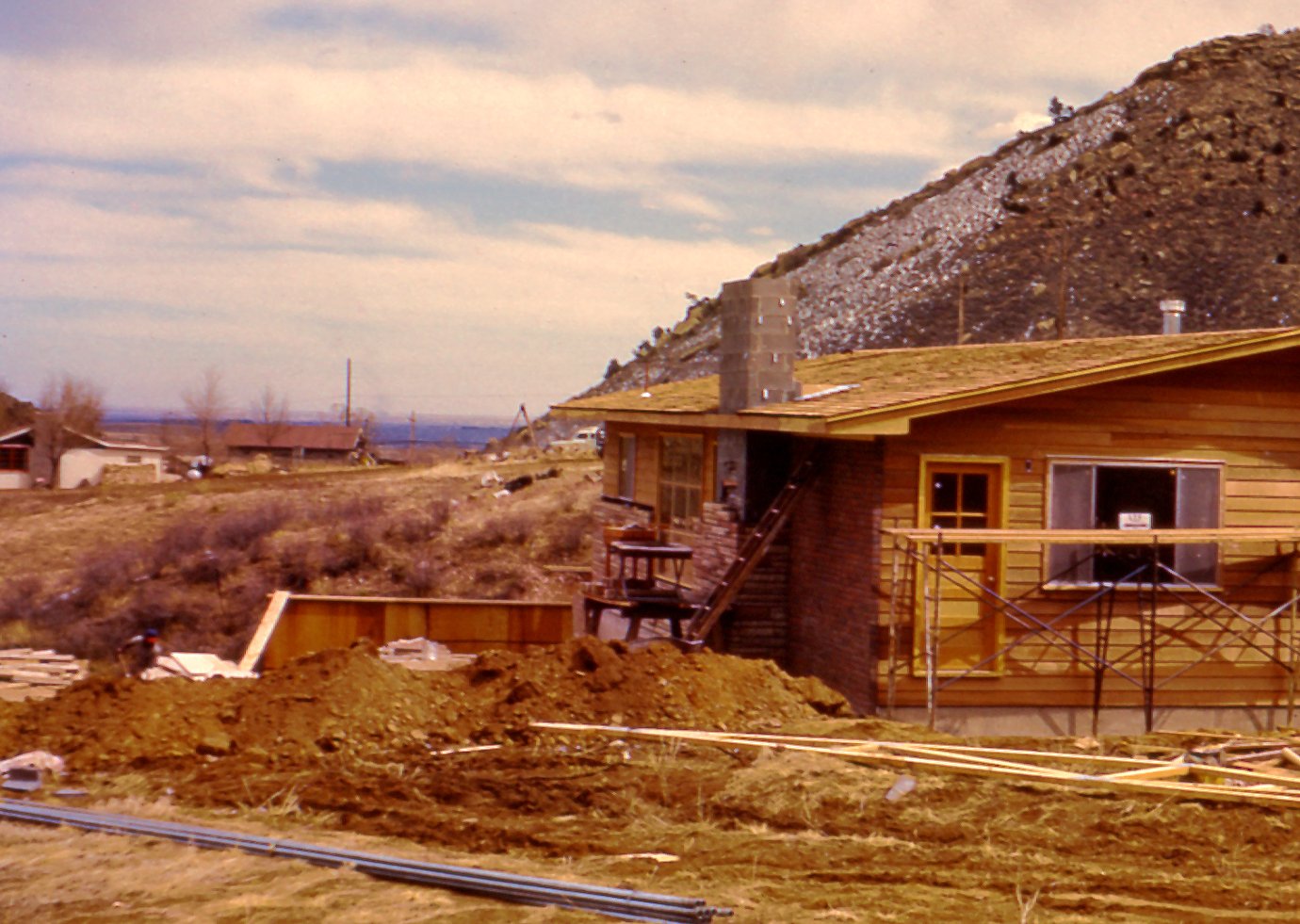
Carl Peinze, real estate agent and former owner of Peinze’s Grocery, continues to build in the new residential subdivision he’s developing in Morrison. Peinze acquired the property and sold several lots during the 1950s, many of which have already had homes built on them. Several other homes are in progress, including a new house at 152 Red Rocks Vista Drive.

Pickup trucks ply the streets, and construction trailers are everywhere, as workers struggle to complete the buildings. The aptly named street, though lacking in trees and other landscaping, affords remarkable views of Morrison’s closest and most celebrated scenic attraction. For the first time in a century, Morrison’s population will swell as the new homes are completed.

View of Red Rocks from Red Rocks Vista Drive, 1962
with houses under construction

Morrison Walking Tour Map

In 1976, Lorene (Reenie) Horton and others completed an inventory of town historic buildings and submitted an application for designation of the Morrison Historical District to the National Register of Historic Places. They also published a walking tour brochure and a “Memory Album” booklet that contained photos collected from town residents. We are in the process of updating our “Places” listing with information from that project. Gradually, we’re getting more of Morrison’s historic sites online, some with more current photos.

We’ve kept the original numbering scheme for the town sites, of course, but be aware that some addresses have changed since 1976. In the 1990s, the fire department renumbered many properties, and we’ve not yet cross-referenced them here. This information is presented mostly as it was written in 1976, with a few comments on more current building uses for reference.

As you explore Morrison, keep in mind that, other than the downtown business district, most of these properties are private residences. Click to enlarge the map below.

Mt. Morrison Honor Roll

Ruth Matthews Schneider poses in front of a mural honoring area men who served in World War II. The men represent families from Morrison proper (Denbow, Fleming, Hocking), as well as outlying areas from Conifer (Turkey Creek, including LeGault, Granzella, Snedeker) to Lakewood, east along Bear Creek (McCoy, VanGorden). The local VFW Post is named after Paul Westover, who was the first local boy to be killed. He died in the Battle of the Bulge, 1944-45.

This mural was on the east wall of the building at 301 Bear Creek Avenue, now the Morrison Inn, facing Stone St. for many years. Click to enlarge the photo. In May 1984, it was replaced with a stylized Mexican motif of saguaro cacti and exotic birds and flowers, which remains today. Pattie Penegor and Donna Dragos were credited with the design and execution of the new mural.

Eye Witness Describes Rescue (1938)

Water Swirled Through Morrison Without Warning, Witness Says

By ROY DENBOW As Told to George Burns, News Staff Writer
Rocky Mountain News, Sept 3, 1938, pages 1-2

MORRISON, Sept. 2. 1 was standing in front of the Morrison Garage when the very heavy rain started. It wasn’t so bad at first so I stayed there and watched it. All of a sudden the water started rolling down in waves from Mount Vernon Canon.

Before I knew what was happening, I was out in the middle of the street and up to my hips in water. There were about eight or 10 persons standing in front of the Mount Morrison Cafe. I hollered to them to run.

I don’t know what they did or what happened to them because the water kept getting deeper and I found I was in it up to my chest. Things started coming at me. An auto trailer, three automobiles, and a truck came pouring out at me on a wave of water that swept through the rear of the garage and out the front.

I was so busy dodging the cars and trucks and stuff that I didn’t have any time for the logs and boulders that were tumbling in the water. Then I saw a gasoline truck come rolling out of the garage with Jim Walpool trapped in the cab.

So Bob Smith and Gilbert Lusce [Luce], who were near the garage, and I waded through the water and pulled Walpool out of the cab just a second before the truck was swept across the road toward raging Bear Creek. Walpool was about half drowned. We high-tailed it to high ground back of the town.

It was 30 minutes before the water went down enough for us to come back to town. I was in the flood in 1933, but this was three times as bad. I was eating supper in my home during the 1933 flood when a wall of water came down Bear Creek and poured into the house. I didn’t waste any time that night. I just beat it right up on the Hog Back and waited for the water to go down. But this flood was far worse than that one.

Bead Hill Angus Ranch

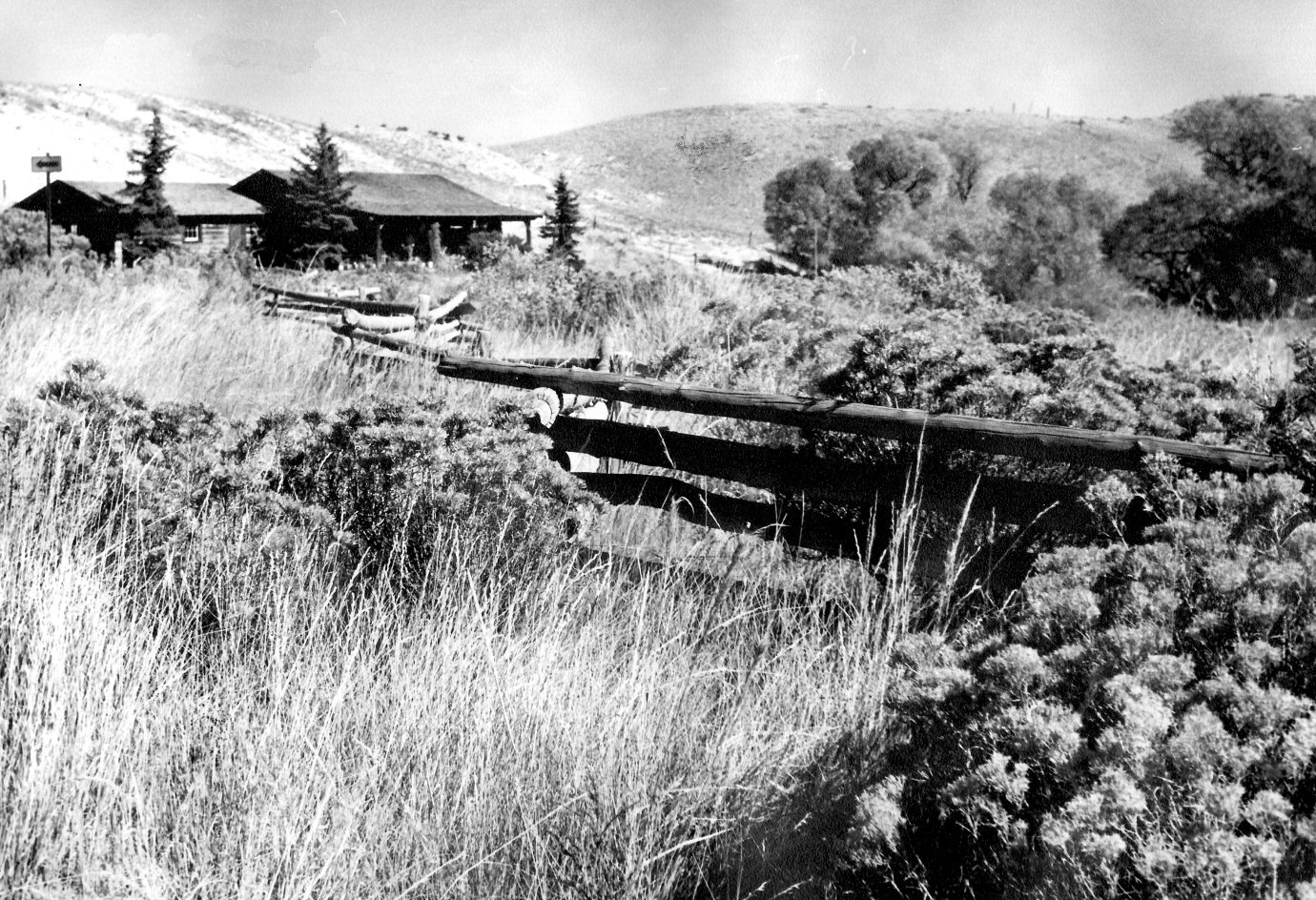
The headquarters of the Bead Hill Angus Ranch.

The headquarters of the Bead Hill Angus Ranch.

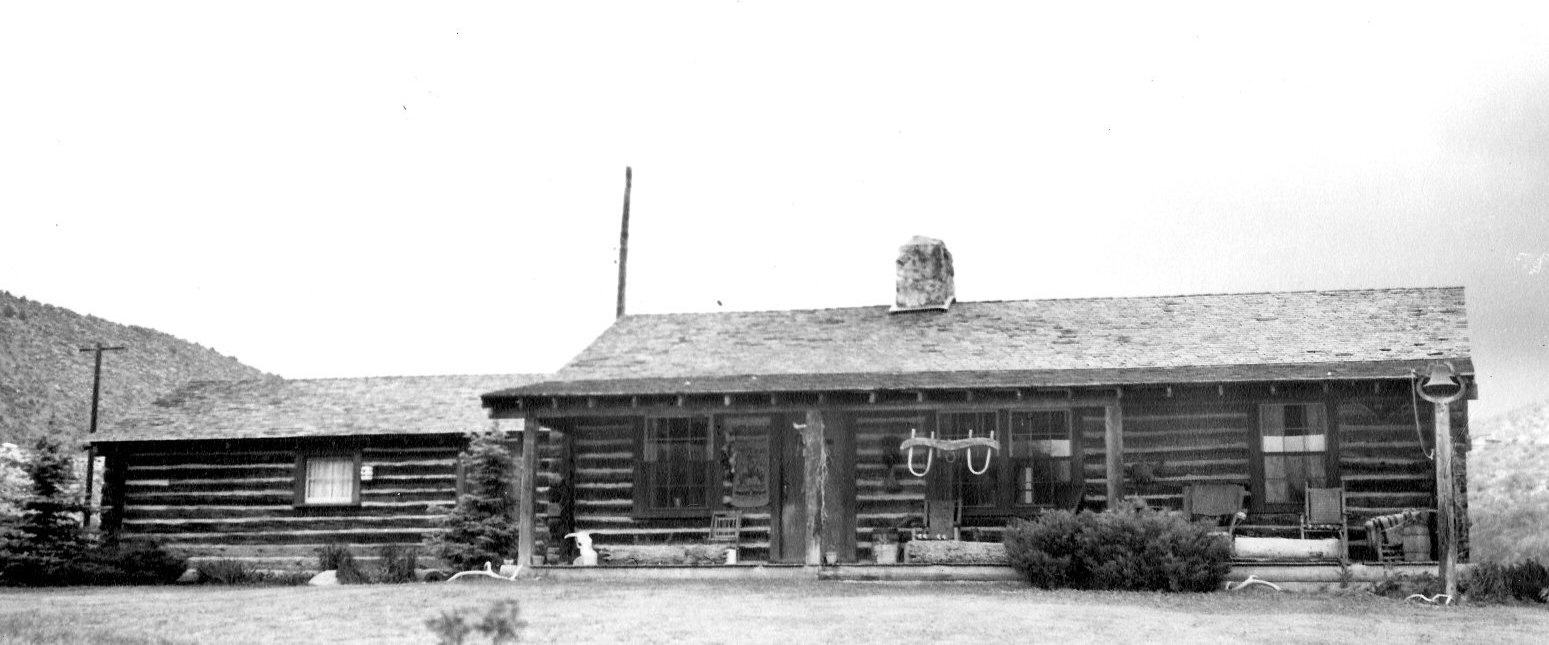
The Cox Cabin, date unknown.

The Cox Cabin, date unknown.

In its original setting, this cabin nestled into a rocky hillside north of Bear Creek was built here by Lee Cox in the 1940s. The one-story building was designed after a stagecoach stop from settlement days, giving it a vintage look earlier than its origins. Mr. Cox probably also gave the adjacent hill its name, Bead Hill, for the Native American artifacts he collected in the area and elsewhere. It is not, to our knowledge, an official placename.

Lee Cox, relaxing on his porch in happier days.

Lee Cox, relaxing on his porch in happier days.

Mr. Cox continued to raise cattle on this land, once owned by the Rooney family, until the 1980s, when the site was endangered by the advent of the beltway being constructed around Denver. His later years were reportedly spent in frustration and bitterness, and he died about 1987 in a nursing home in Morrison. Former Town Board member Dick Scott reconstructs the story:

When the Town hired Carol O’Dowd [as Town Manager] in 1985, the state had already begun obtaining right-of-way for the new four-lane beltway, C-470, around the metro area. The Morrison interchange plan crossed Lee Cox’s ranch and, unable to sell it to be moved, the state would soon demolish his large, modern (built in 1945) “log cabin” ranch house. Lee alone, heartbroken, ill at eighty-some, dourly resisted each visitor while holding his shotgun when answering each knock at his door. Carol described her visit with Lee to me:

“Visiting all Morrison’s neighbors, I knocked on Lee Cox’s door. My smile got me past his shotgun, and I built a relationship of trust. Ill health soon sent him to the Morrison Nursing Home and I visited him there. We reminisced about his life and how to save his home, now in the new state highway right-of-way….”

A last-minute effort saved the cabin itself (read Part 2 here), but the site, now a stone’s throw from C-470, is currently occupied by the Town of Morrison’s sewage treatment plant.

Lee Cox's champion entry in the 1948 National Western Stock Show.

Lee Cox’s champion entry in the 1948 National Western Stock Show.

Remembering Rolf Paul, Mayor and More

In preparation for packing some of our old —and some not so old—historic files off to the Jeffco Archives, we ran across an issue of the Morrison Messenger that was prepared in remembrance of Rolf Paul, who served on Morrison’s Town Board of Trustees from 1974 to 2000, and as mayor from 1980 to 1984. Rolf served the town with dedication, but not without controversy. By nature outspoken and colorful, he made enemies quickly, but turned many of them into friends if they stayed around long enough to appreciate his love for this small town.

Rolf Paul designed the distinctive logo for the town of Morrison, as well as many others in Morrison.

Rolf Paul designed the distinctive logo for the town of Morrison, as well as many others in Morrison.

As Mayor, Rolf quietly protected the small town from financial ruin and did his best to create exciting cultural events to keep the town a dynamic place to live and visit. A graphic artist and independent small-business owner, he juggled the Town’s needs with those of the foil-embossing and die-cutting shop he operated out of his home. For his business and his town, he operated on the principle of “bigger isn’t always better,” his daughter Krista reported. Rolf succumbed to cancer in January 2002, but is still well remembered in Morrison.

Read more about Rolf Paul’s legacy for the Town of Morrison.