
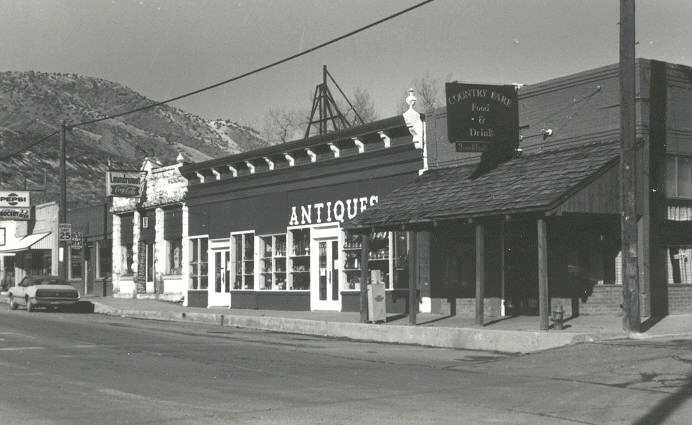
Following a disastrous fire and repeated floods in the 1930s, Morrison’s economy settled into quieter times. Large families established multi-generational lineages as people settled and stayed, representing “hard-working, middle class western America.”
The town was further described, in the 1975 nomination for historic designation:
Though worn by age and lacking the early vitality and bustle of the original town, Morrison is essentially the same town physically and intrinsically. The location and make up of the structures is still the same; the makeup of the residents is essentially the same. The vital element of the railroad is missing but the town’s geographical placement ensures [its] continued involvement as a focus of movement from plains to mountains and vice versa. In a society that places great value on change and revision, it has remained a reflection of the pioneer ethic and physical integrity of a time past.
“Pioneer Days” began in the 1950s as a celebration for the close-knit community and a link to the town’s storied background. In the 1970s, interest in history grew, and designation as a historical district came in 1975, just in time for the nation’s bicentennial. The Morrison Historical Society produced a walking tour map and published the Memory Album. Reenie Horton ran a museum out of her property at 116 Stone St. (#16 on map).
 Morrison History